
Laser Drivers
A laser diode is driven by current, not by voltage. Its optical power follows the current almost exactly, and a short current overshoot can destroy it. A laser driver is a constant-current source built for that job: it holds the set current, limits it, and lets you modulate it. These are modules and chassis units for building into equipment, not benchtop instruments. If what you need is to hold the diode at a stable temperature, that is a TEC controller instead. Most laser modules need both.
ATI builds 80 laser drivers, from 50 mA up to 45 A, starting at $79. Three output types cover the range: linear for the lowest noise, switching for efficiency at high current, and pulse for short high-current bursts. Every DC family has a $25 evaluation board, and dummy laser loads let you test the driver without risking an expensive diode.
Filter and compare laser driver products
Precision laser diode drivers for DPSS lasers, fiber laser subsystems, spectroscopy, sensing, medical diagnostics, laboratory instruments, and OEM photonics equipment. Filter by Output Current, Input Voltage, Driver Type, Package Type, and Evaluation Board, then compare compliance voltage, noise, modulation speed, rise time, datasheets, price, and stock.
Showing 1–12 of 81 resultsSorted by price: low to high
| Image | SKU | Max. Current | Input Voltage | Compliance Voltage (Vf Range) | Noise | Package Type | Datasheet | Price | Stock | Action |
|---|---|---|---|---|---|---|---|---|---|---|
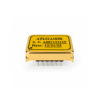 |
ATLS1A103D | 1A | 3.1V ~ 5.5V | 0.4V ~ 4.5V | <6µAP-P | DIP | $79.00 | 10 | ||
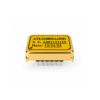 |
ATLS100MA103D | 100mA | 3.1V ~ 5.5V | 0.4V ~ 4.5V | <1.5µAP-P | DIP | $79.00 | 1 | ||
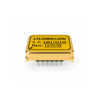 |
ATLS200MA103D | 200mA | 3.1V ~ 5.5V | 0.4V ~ 4.5V | <2.5µAP-P | DIP | $79.00 | 10 | ||
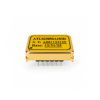 |
ATLS250MA103D | 250mA | 3.1V ~ 5.5V | 0.4V ~ 4.5V | <2.5µAP-P | DIP | $79.00 | 100 | ||
 |
ATLS500MA103D | 500mA | 3.1V ~ 5.5V | 0.4V ~ 4.5V | <5µAP-P | DIP | $79.00 | 3 | ||
 |
ATLS250MA117D | 250mA | 3.3V ~ 10V | 0.5V ~ 8.5V | <3µAP-P | DIP | $79.00 | Out of Stock | ||
 |
ATLS1A117D | 1A | 3.3V ~ 10V | 0.5V ~ 8.5V | <3µAP-P | DIP | $79.00 | Out of Stock | ||
 |
ATLS500MA201D | 500mA | 3.0V ~ 5.5V | 0V ~ 5.8V | <2.74µAP-P | DIP | $79.00 | 30 | ||
 |
ATLS1A201D | 1A | 3.0V ~ 5.5V | 0V ~ 5.8V | <3.49µAP-P | DIP | $79.00 | 8 | ||
 |
ATLS2A201D | 2A | 3.0V ~ 5.5V | 0V ~ 5.8V | <3.97µAP-P | DIP | $79.00 | 8 | ||
 |
ATLS3A201D | 3A | 3.0V ~ 5.5V | 0V ~ 5.8V | <4.48µAP-P | DIP | $79.00 | 22 | ||
 |
ATLS4A201D | 4A | 3.0V ~ 5.5V | 0V ~ 5.8V | <5.41µAP-P | DIP | $79.00 | 26 |
Our Delivery Promise
Fast, flexible fulfillment from San Jose, California, USA — shipped worldwide.
- Fast in-stock shipping — In-stock orders ship within 1–2 business days after confirmation and quality check.
- Made-to-order models — Some models are produced to order. Contact sales@analogti.com for the current lead time.
- Worldwide shipping — Shipped from San Jose to customers worldwide.
- Flexible carrier options — UPS, FedEx, DHL, USPS, freight forwarders, or your preferred logistics partners.
- Clear shipment visibility — Tracking provided after dispatch to support your receiving and production planning.
Laser driver family comparison
Nine families. Two questions get you to the right row: how the output stage works — linear for the lowest noise, switching for efficiency and high current, pulse for short bursts — and how much current your laser diode draws. Then filter above by current, input voltage and package.
| Driver family | Topology | IOUT | VIN | Eval board | Choose this if… |
|---|---|---|---|---|---|
| ATLP Pulse ATLP10N30A301 | Pulse CC | 30 A peak | 11 – 13 V | — | Short bursts, not continuous drive. The switch turns on for nanoseconds, so peak current is high but average power stays low. Usually no heatsink. |
| ATLS-212D ATLS50MA212D; ATLS500MA / 1A / 2A / 3A / 5A212DHS variants: 500mA to 3A. | Switching CC | 50 mA – 5 A | 4.5 – 15 V | ATLS212EV1.0 | The general-purpose switching family. A 12 V rail and a few amps. HS variants are faster if you need to modulate. |
| ATLS-214D / 216D ATLS4A / 6A214D; ATLS8A / 10A / 12A216D | Switching CC | 4 – 12 A | 5 – 15 V | ATLS214EV1.0 ATLS216EV1.0 |
Pump diodes. Higher current on the same low-voltage rail, still in a DIP module. |
| ATLS-217D / 218D / 219D ATLS4A / 10A217D; ATLS15A218D; ATLS25A219D | Switching CC | 4 – 25 A | 5.5 – 40 V | ATLS216EV1.0 ATLS218EV2.0 |
Highest DC current, widest input. Up to 25 A, and enough compliance for a long series string of diodes. |
| ATLS-201D / 202D / CWD / LDA-CP ATLS500MA / 1A / 2A / 3A / 4A / 6A201D and 202D; CWD-01-V2-D; LDA1-CP1-D / CP2 | Switching CC + Sync / CC-CP |
0.5 – 6 A | 3.0 – 5.5 V | ATLSXA201DEV1.0 ATLSXA202DEV1.0 |
Efficient drive from a 5 V rail. The 202D models synchronise to other switchers on the board. The LDA models add constant-power mode with a photodiode. |
| ATLS-102D / 103D / 106D ATLS1A102D; ATLS100MA / 200MA / 250MA / 500MA / 1A103D; ATLS250MA / 500MA106D | Linear CC | 100 mA – 1 A | 3.0 – 5.5 V | ATLS1A103DEV1.0 | The quiet workhorse. Lowest noise at low current, from a 5 V rail. Start here for measurement instruments. |
| ATLS-104D ATLS100MA / 250MA / 500MA / 1A / 1.5A104D | Linear CC | 100 mA – 1.5 A | 3.1 – 5.5 V | ATLS1A104DEV1.0 | You need to modulate fast. The quickest family in the range, and still a linear low-noise design. |
| ATLS-116D / 117D / 118 + AQCL-410 ATLS100MA116D; ATLS1A117D; ATLS1A / 2A / 3A / 10A118; AQCL100MA / 200MA / 500MA410DF; AQCL1A / 2A / 3A410SE | Linear CC / QCL | 100 mA – 10 A | 3.3 – 28 V | ATLS116EV1.0 ATLS1A103DEV1.0 |
High forward voltage, still quiet. Series strings and quantum cascade lasers. The ATLS100MA116D is the lowest-noise part ATI makes. |
| AAS AC-Input AAS12A12V2; AAS25A6V2; AAS40A3.5V; AAS40A4V2; AAS45A4V2 | Switching CC | 12 – 45 A | 100 – 240 VAC | — | No DC rail available. A chassis unit that plugs into the wall. For standalone equipment rather than a board build. |
Explanation:
- Switching CC: PWM-based constant-current topology for high efficiency at higher drive currents.
- Linear CC: Low-noise linear constant-current topology for sensitive optical applications.
- Pulse CC: Pulsed constant-current drive for high peak currents in short bursts.
- QCL: Specialized topology for Quantum Cascade Lasers with high compliance voltage.
- Not in this table: Current noise, modulation bandwidth, rise time, compliance voltage and module size differ within each family. They are listed on every product page and in the datasheet.
- CC / CP: For example, LDA1-CP1-D. CC holds the drive current steady. CP uses feedback from a monitor photodiode to hold the optical power steady. The LDA models support both.
- HS: For example, ATLS1A212DHS. The driver is a high-speed variant with faster rise time and modulation bandwidth.
- -D: For example, ATLS1A103D. The driver comes in a DIP package.
- -S: For example, ATLS2A212S. The driver comes in an SMT package.
For a more detailed family comparison, read the family comparison table. For full specifications, see the individual product pages above.
Features & Advantages of ATI Laser Drivers
Why choose ATI laser drivers? Because a laser diode is easy to destroy and hard to keep quiet. These modules put the protection, the low-noise output stage, and the monitoring in one small package, so the risky part of the design is already done.
- Full Protection as Standard — Soft start and soft turn-off, adjustable current limit, over-current and over-temperature shutdown, and supply under-voltage and over-voltage protection. Selected models add reverse-polarity protection on the input. A laser diode fails in microseconds, so this is not an optional feature.
- Linear or Switching, Same Catalog — Linear models give the lowest current noise, down to 300 nAP-P on the ATLS100MA116D. Switching models give higher efficiency and much higher current, up to 45 A on the AC-input AAS chassis units. The choice is a trade-off, and both sides of it are here.
- Wide Compliance Voltage — The switching families deliver up to 0.8 × the supply voltage at the output. That headroom lets one driver run several laser diodes in series, or a single diode with a high forward voltage, without adding a second supply rail.
- Fast Modulation — The ATLSxA104 linear series modulates to 7.61 MHz with rise times from 46 ns. The ATLSxA103, 116D and 117D families reach the megahertz range. Analog modulation input is standard, so the current follows your signal directly.
- Built-in Monitoring — Real-time output current monitoring, a precision 2.5 V reference that can also serve your ADCs and DACs, and a control-loop good indication on selected models. The LDA1-CP models accept monitor-photodiode feedback for constant optical power.
- Compact and Shielded — The DIP modules come in a six-sided metal enclosure. Small size and low EMI both matter here, because the driver usually sits next to the detector, the TEC controller, and the low-level analog front end.
- Evaluation Boards and Dummy Loads — Every DC family has a $25 evaluation board. ATI also sells dummy laser load assemblies, so the first power-up happens into a resistor stack rather than into a laser diode that costs more than the instrument.
For a more detailed family comparison, read the laser driver comparison table. For full specifications, see the individual product pages above.
Typical Applications of ATI Laser Drivers
Where are ATI laser drivers used? Anywhere a laser diode has to run at a controlled current, quietly, for a long time.
- DPSSL and fiber laser pumping — Pump diodes draw high current at low voltage, and their output has to stay steady. The high-current switching families cover this: ATLS4A214D and ATLS6A214D on a DC rail, or the AAS chassis units straight from the AC line.
- EDFA and optical amplifiers — Pump laser current sets the gain, so current noise turns into gain noise. ATLS500MA212D and the ATLSxA103 linear family are common starting points.
- Spectroscopy and gas sensing — Tunable diode laser absorption spectroscopy needs quiet current and a modulation input. ATLS100MA116D gives the lowest noise in the range; the AQCLxA410 series drives quantum cascade lasers for mid-infrared work.
- Metrology and interferometry — Current noise becomes wavelength noise, and wavelength noise becomes measurement error. The ATLSxA104 and ATLSxA106 linear families suit these instruments.
- Telecom and datacom modules — Transmitter diodes in transceivers and DWDM equipment need stable current and, usually, temperature control alongside it.
- Medical and diagnostic equipment — Therapeutic and analytical instruments where the optical dose depends on the drive current holding its value.
- Imaging, LiDAR and illumination — Continuous drive for illumination lasers, or the ATLP10N30A301 for short bursts of up to 30 A peak.
- Industrial and OEM systems — Marking, materials processing and inspection equipment, where the driver is built into a machine and has to run for years without attention.
How to choose the right laser driver
Six steps, in this order. The first two rule out most of the catalog.
1. Start with the diode
Take the operating current, the absolute maximum current, and the forward voltage from the laser diode datasheet. Everything else follows from these three numbers.
2. Choose CC or CP
Constant current is simpler and protects the diode directly. Constant power holds the light output steady as the diode ages, but needs a monitor photodiode.
3. Decide noise against efficiency
Linear models are quieter and waste the difference as heat. Switching models are efficient and add a small ripple at the switching frequency. Pick the one your measurement can live with.
4. Check the compliance voltage
The driver must supply the diode forward voltage plus the sense and cable drops. If it cannot, the loop saturates and the current never reaches the set value.
5. Match the modulation bandwidth
Continuous operation needs none. Analog modulation or fast switching needs a linear family. Confirm the rise time as well as the bandwidth figure.
6. Test on an evaluation board
Set the current limit before the diode is ever connected. Use a dummy laser load for the first power-up, then repeat with the real diode.
Laser driver FAQ
Common questions about selecting and using ATI laser drivers.
Should I choose a linear or a switching laser driver?
Linear drivers regulate the current with a pass element, so the output is very quiet. The cost is efficiency: the voltage the diode does not use is dissipated as heat inside the module. They suit currents up to a few amps in measurement instruments.
Switching drivers use a PWM stage. They run cool, reach much higher currents, and add a small ripple at the switching frequency. They suit pump diodes, industrial equipment and anything above a few amps.
What is compliance voltage, and how much do I need?
Compliance voltage is the highest output voltage the driver can develop while still holding the set current. It has to cover the laser diode forward voltage plus the drops across the sense resistor and the wiring.
If the compliance is too low, the loop saturates and the current stops short of the set value. Check the number against the diode forward voltage at its maximum current, not at its typical current.
Can one driver run more than one laser diode?
In series, yes, as long as the compliance voltage covers the total forward voltage of the string. The switching families deliver up to 0.8 × the supply voltage, which is what makes this practical.
In parallel, no. Diodes do not share current evenly, so one takes more than its share and fails first. Use one driver per string.
How do I set the current limit?
Set it before the laser diode is connected. Power the driver into a dummy load, adjust the limit to the value you want, and confirm it with a meter. Then connect the diode.
Set the limit from the diode absolute maximum current, with margin, not from its operating current. The limit exists to survive a fault, not to set the working point.
Do the switching models put ripple on the laser current?
Yes, a small ripple at the switching frequency. For most laser applications it does not matter. For a sensitive optical measurement it can.
There are three answers: use a linear model, add the ATLF20A5V output filter, or use the ATLSxA202D models, which accept an external synchronisation signal so several switching supplies on the same board run at one frequency instead of beating against each other.
How fast can the output current be modulated?
It depends on the family. The ATLSxA104 linear series reaches 7.61 MHz with rise times from 46 ns. The ATLSxA103, 116D and 117D families reach the megahertz range. The switching families are in the kilohertz range, typically 4 kHz to 20 kHz.
Bandwidth and rise time are separate numbers. If your signal has sharp edges, check the rise time.
Do I need a TEC controller as well?
Usually yes, if the wavelength matters. The emission wavelength of a laser diode moves with junction temperature, and the driver does nothing about that. Holding the current steady keeps the power steady; holding the temperature steady keeps the wavelength steady.
ATI builds both, so they can be specified together. See TEC controllers.
What does the evaluation board give me?
A socket for the DIP module, potentiometers for the output current and the current limit, and a dummy laser load built from ordinary diodes. You can set up and check the whole circuit before a real laser diode is at risk.
The boards cost $25. ATI also sells separate dummy load assemblies, ATLS212DLD1.0 and ALLD10A14V, for testing at higher current.
Which models suit a quantum cascade laser?
The AQCLxA410 series, and the ATLSxA118 family it shares a platform with. Quantum cascade lasers need a high compliance voltage, and these run from a 10 V to 28 V input with the output reaching the supply voltage minus 4 V.
Both are ultra-low-noise linear designs, because mid-infrared spectroscopy is where current noise shows up most clearly in the result.
What should I send you to get a recommendation?
Six things: the diode operating current and absolute maximum current, the forward voltage, whether you need constant current or constant power, the modulation bandwidth, your current-noise target, and any size or sealing constraints.
With those we can name the part, or tell you that nothing in the catalog fits and what a custom version would involve. Vacuum-compatible, low-outgassing and fully potted versions have been built before.
Are ATI laser drivers RoHS and REACH compliant?
Yes. All ATI laser drivers are 100 % lead-free, RoHS-compliant, and REACH-compliant, and the certificates are on file: RoHS certificate and REACH certificate of compliance.