
X-Ray HV Power Supplies
An X-ray high voltage power supply drives an X-ray tube: high voltage for the anode and a separate, adjustable supply for the filament, in one unit. Use one when you are integrating a tube into an instrument — imaging, inspection, thickness gauging, XRF. A general-purpose high voltage supply cannot do this, because it has no filament output and no way to program tube current.
Three models, 10 kV to 50 kV at 1 mA, from $1,999. Voltage and current are programmed separately, locally or remotely, each with a monitor output. Arc and short-circuit protection and a safety interlock are standard, and output drift stays under 0.01% per hour after warm-up.
Find your X-ray power supply
Three models, separated only by output voltage — 10 kV, 20 kV and 50 kV, all at 1 mA from a 24 V rail. Pick the one that matches your tube’s anode rating. What you get beyond a plain high voltage supply is set out below.
Showing all 3 resultsSorted by price: low to high
| Image | SKU | Output Voltage | Max. Current | Input Voltage | Package Type | Datasheet | Price | Stock | Action |
|---|---|---|---|---|---|---|---|---|---|
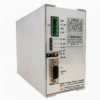 |
AXHV24VP10KV1MABT | 0 ~ 10kV | 1mA | 23 ~ 25V | Benchtop | $1,999.00 | Made to Order | ||
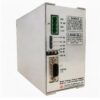 |
AXHV24VP20KV1MABT | 0 ~ 20kV | 1mA | 23 ~ 25V | Benchtop | $2,399.00 | Made to Order | ||
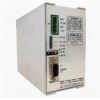 |
AXHV24VP50KV1MABT | 0 ~ 50kV | 1mA | 23 ~ 25V | Benchtop | $3,699.00 | Made to Order |
Our Delivery Promise
Fast, flexible fulfillment from San Jose, California, USA — shipped worldwide.
- Fast in-stock shipping — In-stock orders ship within 1–2 business days after confirmation and quality check.
- Made-to-order models — Some models are produced to order. Contact sales@analogti.com for the current lead time.
- Worldwide shipping — Shipped from San Jose to customers worldwide.
- Flexible carrier options — UPS, FedEx, DHL, USPS, freight forwarders, or your preferred logistics partners.
- Clear shipment visibility — Tracking provided after dispatch to support your receiving and production planning.
What you get beyond a plain high voltage supply
An X-ray tube needs two supplies that have to be controlled together, plus protection against what happens when a tube arcs. That is what separates this series from everything else in the catalogue.
- The filament supply is built in and adjustable. 0 to 5.5 V at up to 3.5 A, set from the front panel. Filament current is what sets emission, so this is not an accessory — it is half of what makes the tube work. Sourcing and synchronising a separate filament supply is the main reason people give up on general-purpose modules.
- Voltage and current are programmed independently. Both by a local 10 kΩ panel potentiometer or a remote 0–10 V signal into a 10 MΩ input, where 0 to 10 V maps to zero through full rating. You set the accelerating voltage and the tube current separately, which is how X-ray work is actually specified.
- Both are monitored. Separate voltage and current monitor outputs, 0 to 10 V for zero to full scale from a 10 kΩ source, so your instrument can read back what the tube is actually doing rather than what it was asked to do. Panel display accuracy is ±1%.
- Arc protection specified for tube work. Tubes arc, and the datasheet for this series states arc and short-circuit protection explicitly alongside over-current protection — which matters when you have to document the protection in your own system safety case. Instantaneous short-circuit current is held under 100 mA.
- A safety interlock input. Pin 8 on the D-connector must be tied to ground for the high voltage to come on. Wire it to your enclosure door or shutter and the supply cannot energise with the system open.
- Stability for quantitative work. Under 0.01% per hour after a 30-minute warm-up, under 0.02% over 8 hours, and 25 ppm/°C. Output voltage temperature stability is under ±0.01% across the full 0 to 50 °C range. For XRF, thickness gauging and densitometry, that is what makes a reading repeatable from one run to the next.
Practical notes:
- Input current: up to 2.5 A at 24 V on the 10 kV model, 3 A on the 20 kV and 4.25 A on the 50 kV. Size the 24 V supply from these, not from the high-voltage output power.
- Minimum load: 10 MΩ on the 10 kV model, 20 MΩ on the 20 kV, 50 MΩ on the 50 kV. Lighter loading is fine, all the way to open circuit.
- Cooling: natural convection up to 60 W; above that, provide forced air. Operating range is 0 to 50 °C.
- Warm-up: the stability figures apply after about 30 minutes. Allow for that in a measurement routine.
- Discharge time: after switching off, wait around five minutes before touching the high-voltage side. Ground the chassis reliably.
- Naming: AXHV24VP20KV1MABT reads as AXHV series · 24 V input rail · P for positive output · 20 kV · 1 mA · BT for benchtop. All three models are positive-output benchtop units.
- We supply the power supply, not the tube or the shielding. Radiation shielding, interlocking and regulatory compliance for the finished system are the integrator’s responsibility.
Questions about this series
Will this drive my tube?
These are designed for grounded-filament tubes, with the filament supply referenced accordingly. Check your tube’s anode voltage, emission current and filament requirements against the model you are considering — and send us the tube datasheet if you want us to confirm before you order. A mismatch here is expensive.
Do I need a separate filament supply?
No, that is the point of this series. The filament supply is integrated and adjustable from 0 to 5.5 V at up to 3.5 A, controlled from the same front panel.
Can I run it from a computer?
Yes. Voltage and current each accept a remote 0–10 V program on the 9-pin D connector, and each has a monitor output back. A +10 V reference is available on the same connector. For local control you tie the program input to the panel potentiometer output instead, using the same connector.
What does the interlock actually do?
The high voltage will not turn on unless the interlock pin is connected to ground. Route it through a door switch, shutter position sensor or your system controller so that opening the enclosure removes the high voltage rather than relying on procedure.
Why is it so much more expensive than a 50 kV module?
Because you are buying the filament supply, the dual programming and monitoring, the arc protection, the interlock, and drift specified under 0.01% per hour. If your application only needs a static 50 kV bias and no tube, a DC-DC module costs a fraction as much and is the sensible choice.
Can you customize it?
Yes — OEM customization is available for output rating, control interface and mechanical format. Tell us the tube, the duty cycle and where the unit has to fit.