
Resistor Kits
An SMD resistor kit is every value you might reach for, stocked, sorted and labelled, sitting on your bench. Use one when you are prototyping, debugging or repairing and the cost of not having a 4.99 kΩ part is three days of waiting, not the eleven cents the part costs. If you already know exactly which values your design needs and you are building in volume, buy reels instead — a kit is for the stage where you do not know yet.
ATI has been building these since 1997. 18 kits in 58 configurations, from $79: tolerances of 5 %, 1 % and 0.1 %, packages from 0201 to 1206, and 61 to 760 values per kit covering 0 Ω to 100 MΩ. Every kit arrives in a case where each value has its own lidded bin with the value printed on the lid — 128 or 200 of them — rather than a taped strip in a paper book.
Find your resistor kit
Filter by package size, tolerance, number of values or pieces per value. Three decisions get you there, in this order: the package your boards use, the tolerance your circuits need, then how deep you want to stock each value. Part numbers read straight off those: R06E96 is 0603 in the E96 value series, and the suffix is the quantity, so R06E96-200 holds 200 pieces of each of its 510 values. If you are outfitting a bench for the first time, R06E24 — 0603, 1 %, 128 values — is where most people start.
Showing 1–12 of 18 resultsSorted by price: low to high
| Image | SKU | Package Size | Tolerance | Distinct Values | Datasheet | Price | Stock | Action |
|---|---|---|---|---|---|---|---|---|
 |
R06E24 | 0603 | 1% | 128 Values | Price range: $79.00 through $229.00 | In Stock | ||
 |
R08E24 | 0805 | 1% | 128 Values | Price range: $79.00 through $299.00 | In Stock | ||
 |
R04E24 | 0402 | 1% | 128 Values | Price range: $79.00 through $199.00 | In Stock | ||
 |
R12E24 | 1206 | 1% | 128 Values | Price range: $89.00 through $399.00 | In Stock | ||
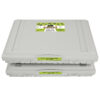 |
R08-170V | 0805 | 5% | 170 Values | Price range: $99.00 through $169.00 | In Stock | ||
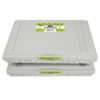 |
R06-170V | 0603 | 5% | 170 Values | Price range: $119.00 through $169.00 | In Stock | ||
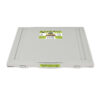 |
R06-61V | 0603 | 0.1% | 61 Values | Price range: $149.00 through $839.00 | In Stock | ||
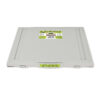 |
R02B169 | 0201 | 1% | 169 Values | Price range: $159.00 through $1,419.00 | In Stock | ||
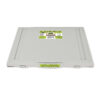 |
R04B196 | 0402 | 1% | 196 Values | Price range: $159.00 through $509.00 | In Stock | ||
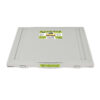 |
R06-131V | 0603 | 0.1% | 131 Values | Price range: $229.00 through $1,739.00 | In Stock | ||
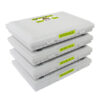 |
R04E96 | 0402 | 1% | 510 Values | Price range: $249.00 through $749.00 | In Stock | ||
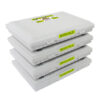 |
R06E96 | 0603 | 1% | 510 Values | Price range: $249.00 through $799.00 | In Stock |
Our Delivery Promise
Fast, flexible fulfillment from San Jose, California, USA — shipped worldwide.
- Fast in-stock shipping — In-stock orders ship within 1–2 business days after confirmation and quality check.
- Made-to-order models — Some models are produced to order. Contact sales@analogti.com for the current lead time.
- Worldwide shipping — Shipped from San Jose to customers worldwide.
- Flexible carrier options — UPS, FedEx, DHL, USPS, freight forwarders, or your preferred logistics partners.
- Clear shipment visibility — Tracking provided after dispatch to support your receiving and production planning.
Which series do I need?
Six families. The choice is made by tolerance and by how fine you need the value steps — package size and quantity are separate decisions you make afterwards using the filters.
| Series | Tolerance | Values | Range | Packages | Choose this if… |
|---|---|---|---|---|---|
| Classic 5 % R06-170V, R08-170V · from $99 | 5 % | 170 | 0 Ω – 10 MΩ | 0603, 0805 | Pull-ups, LED current limiting, repair work, teaching. Anywhere the exact value does not matter and the cheapest kit wins. |
| Classic E24 R04/R06/R08/R12 E24 · from $79 | 1 % | 128 | 1 Ω – 10 MΩ | 0402, 0603, 0805, 1206 | The default bench kit. 24 steps per decade in 1 % parts covers the large majority of everyday design work at the lowest price per kit. |
| Classic E96 R04/R06/R08/R12 E96 · from $249 | 1 % | 510 | 0 Ω – 20 MΩ | 0402, 0603, 0805, 1206 | You design dividers, gain-setting and feedback networks and need the value that lands on your calculated ratio, not the nearest one. |
| Differential E96 R04/R06/R08 E96-50-300 · from $299 | 1 % | 510 | 0 Ω – 20 MΩ | 0402, 0603, 0805 | You want full E96 coverage but 300 pieces of the values you burn through and 50 of the ones you touch twice a year. |
| Upgraded Series R02B169, R04B196, R04B760 · from $119 | 1 % | 169, 196, 760 | 0 Ω – 100 MΩ | 0201, 0402 | You build dense boards in 0201 or 0402, or you want the widest range we stock — out to 100 MΩ. Differential quantities come as standard on these. |
| Precision 0.1 % R06-61V, R06-131V · from $149 | 0.1 % | 61, 131 | 10 Ω – 1 MΩ | 0603 | Precision analog: reference dividers, instrumentation gain networks, current sense, anything where a 1 % part is the dominant error term. |
Where the parts come from, and how to read the part numbers
- Most resistors in these kits are made by YAGEO, from its RC series of thick-film chip resistors. For resistance range by tolerance, temperature coefficient, power rating, working voltage and part marking of the YAGEO parts, see the YAGEO RC series datasheet (PDF).
- R06E96-200 reads as: R for resistor, 06 for the 0603 package (02 = 0201, 04 = 0402, 08 = 0805, 12 = 1206), E96 for the value series, and 200 for the number of pieces supplied of each value.
- Differential quantities mean the kit is not packed with the same number of pieces in every bin. Commonly used values are supplied in larger quantities and rarely used values in smaller ones. The reason is simple: in an evenly packed kit, the 10 kΩ bin empties long before anything else, and at that point the kit is finished even though most bins are still full. A quantity option written as 100-40D means 100 pieces of each commonly used value and 40 pieces of each rarely used one.
- The case comes in 128-bin and 200-bin sizes, matched to the number of values in the kit, and each bin has its own lid with the value printed on it. Kits with more values than fit in one case ship as a set — the 170-value kits are two cases and the 760-value kit is four, each bought as one part number.
- 0 Ω parts are included in most kits and are not a packing mistake. They are jumpers. Use one to carry a trace across another on a single-layer route, to make a link you can remove later so you can isolate part of the circuit while debugging, or to select between two alternative circuits sharing one board by populating one path and leaving the other empty.
Need a value list, a package or a quantity split we do not list? Tell us what you need in the box and we will let you know whether we can put it together.
Three things to settle before you order
A kit is a few hundred dollars that sits on your bench for years, so it is worth five minutes of thinking about which one.
1. Tolerance: less than you think, or much more
Most resistors in a design are not doing anything precise — a pull-up, a gate resistor, an LED limiter. For those, 5 % is fine and 1 % is fine and it makes no difference. Tolerance matters where two resistors set a ratio: a divider feeding an ADC, a gain network, a current sense. There, the tolerance of the pair lands directly in your measurement, and moving from 1 % to 0.1 % takes a whole error term off the table. Most benches want a 1 % kit for everyday work and a small 0.1 % kit alongside it for the handful of places that need it — which is why the 0.1 % kits are only 61 and 131 values.
2. More values, or more of each value
These are independent choices and they pull in opposite directions on price. More values means you can hit the exact number you calculated, which matters for design work. More pieces per value means you are not re-ordering in six months, which matters if you build the same board repeatedly or you have several engineers pulling from the same box. If you are unsure, go wide on values first: running out of 100 pieces of one value is an annoyance, but not having 4.99 kΩ at all stops the job.
3. Package size, and being honest about 0201
Buy the package your boards actually use. If that is a mix, 0603 is the usual bench compromise — small enough for dense work, still placeable with tweezers and a steady hand. Go to 0402 when your layouts demand it, and to 1206 if you want the easiest hand-soldering or need to dissipate more heat. And 0201 only if you already work at that size: those parts are the size of a grain of sand, they need a microscope and fine tweezers, and they will not forgive a sneeze.
Why buy kits from ATI
- Every value gets its own lidded bin, with the value printed on the lid — Not a compartment tray with one long lid, and not a book of taped strips. Each of the 128 or 200 bins opens on its own and carries its value printed on the lid, so finding a value is reading a lid rather than counting positions, and taking a part out leaves every other value closed and undisturbed. Over the years a kit is in service, that is what decides whether the lids still match what is in the bins. ATI calls this case the Super Enclosure and it is our own patented design, but the bins are the point, not the name.
- Packed the way kits actually get used — The Upgraded and Differential kits supply larger quantities of the values you use constantly and smaller quantities of the ones you rarely need. In a kit where every bin holds the same count, the most-used value runs out first and the kit stops being useful while most of the other bins are still nearly full.
- Ranges other kit vendors skip — 0201 parts, 0.1 % tolerance, values out to 100 MΩ, and 760-value sets. Most kit sellers stop at 1 % in 0603 and 0805.
- Restock without rebuying — Empty enclosures and blank label sheets are sold separately, so you can extend a kit, split one between benches, or start your own organised stock rather than buying a whole kit again.
- Ask us about custom kits — We build these ourselves, so a different value list, package or quantity split is worth asking about. Tell us what you need and we will let you know whether we can build it.
- The rest of the bench too — Capacitor and inductor kits use the same cases and the same logic, so a bench outfitted from ATI stays consistent.
Who buys these
Design and prototyping benches
The core case. You are iterating on a board, the value changes three times in an afternoon, and a kit is the difference between finishing today and ordering parts.
Repair and rework
Field service and board-level repair, where the part you need is whichever one burned out and you have no way to predict it in advance.
Test and characterisation
Building loads, dividers and calibration networks on the bench — the place where the 0.1 % kits earn their price.
Small-batch production
Low-volume and NPI builds where reeling every value is not economic. The 500-piece and 1,000-piece options exist for this.
Universities and training labs
Shared benches where parts need to survive being handled by people who did not put them away last time. Lidded bins matter more here than anywhere.
Anyone tired of waiting
Hobbyists, makers and one-person consultancies, where a $79 kit removes shipping delays from the critical path for years.
Frequently asked questions
E24 or E96 — which do I actually need?
E24 gives 24 values per decade, E96 gives 96 — four times finer, so you land closer to the value your calculation asked for. Our E24 kits hold 128 values from 1 Ω to 10 MΩ, approximating the E-24 steps with 1 % parts; the E96 kits hold 510 from 0 Ω to 20 MΩ. For most work E24 is enough. E96 earns its price where two resistors set a ratio — a divider or gain network that asked for 4.99 kΩ and would otherwise sit at 4.7 kΩ carrying the error. A common answer is an E24 kit for everyday work, plus one E96 kit in the package you use most.
What does “differential” mean in a kit?
It means the bins do not all hold the same number of pieces. Values you reach for constantly — 10 kΩ, 1 kΩ, 100 Ω — are supplied in larger quantities, and values you touch a few times a year in smaller ones. An option written as 50-20D holds 50 pieces of each commonly used value and 20 of each rarely used one; our 50-300 kits hold 50 of each rarely used value and 300 of each common one. It matters because in a kit where every bin holds the same count, the most-used value runs out first and the kit stops being useful while most of the other bins are still nearly full.
Can I buy the case on its own, or blank labels?
Yes. Empty cases in 128-bin and 200-bin sizes, and sheets of blank label stickers, are sold in our Empty Boxes category. The lids on a kit arrive with the value already printed on them, so the blank sheets are for the empty cases — splitting a kit across two benches, extending one with values you buy on reels, or getting existing loose stock into something with lids on it.
How do I read the markings on the parts?
The 5 % parts use a three-digit code: the first two digits are the value and the third is the number of zeros, so 472 is 4.7 kΩ. In 0603, 1 % parts use the three-character EIA-96 code, where two digits give the value and a letter gives the multiplier: 88A is 806 Ω. In 0805 and 1206, 1 % parts use four digits: 4991 is 4.99 kΩ. Parts in 0402 and 0201 carry no marking at all, which is the real reason the bins have printed lids: once an 0402 part is loose on the bench, nothing on the part itself will tell you what it is.
Which package size should I buy?
Match your boards. If you are choosing for a general bench, 0603 is the usual answer — small enough for dense layouts and still workable with tweezers. 0805 and 1206 are easier to hand-solder and handle more power, so they suit repair, teaching and higher-dissipation work. 0402 and 0201 are for dense commercial layouts and want a microscope. As a rule, the larger the package the more heat it can shed, so check the power rating for your application rather than assuming a kit part will do.
Why are there 0 Ω resistors in the kit?
They are jumpers. A zero-ohm part lets you hop one trace over another on a single-layer route, fit a link you can remove later to isolate a section for debugging, or populate one of two mutually exclusive options on the same board. They are one of the more used bins in any kit.
Can I get a kit with my own value list?
Ask us. We build these ourselves rather than reselling someone else's kit, so a custom value list, a different quantity split or a package we do not list as standard is worth a conversation. Send us the list and the quantity you have in mind and we will tell you whether we can build it and what it would cost.
Is the value printed on each bin?
Yes. Every bin lid has its value printed on it, and blank label sheets are available separately so a bin you repurpose does not end up marked in pen. This is the part of a kit that decides whether it is still usable in three years.