An amplifier reproduces a signal at a larger size and keeps its shape. Use one when the source cannot drive the load directly — not enough voltage, not enough current, or two circuits that must not share a ground. If the load only needs to sit at a fixed voltage, a high voltage power supply or an isolated DC-DC converter is the right part instead.
ATI groups 41 amplifiers into four families. Coverage runs from nanovolt noise measurement to 2.5 kV outputs at up to 100 mA, with prices from $75. All four are built for laboratory, test and instrument work, and ship from San Jose, California.
Showing 21–40 of 41 resultsSorted by price: low to high
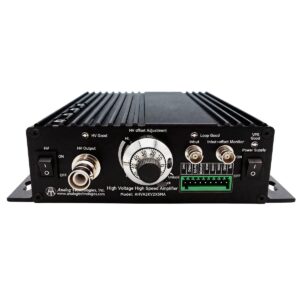
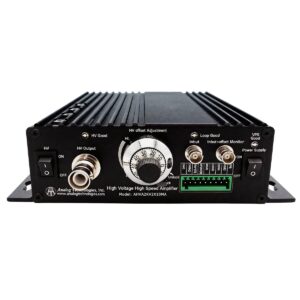
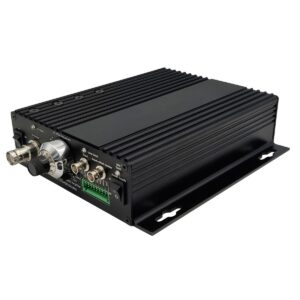
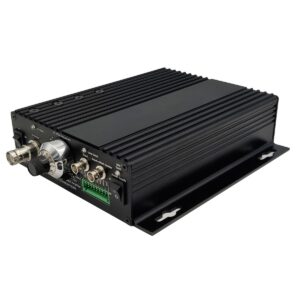
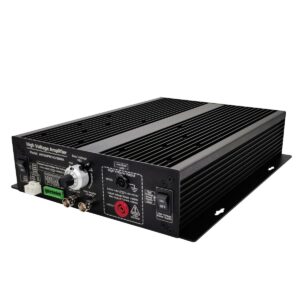
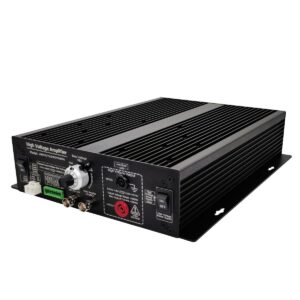
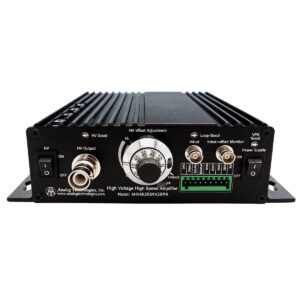
A small control signal, reproduced at high voltage
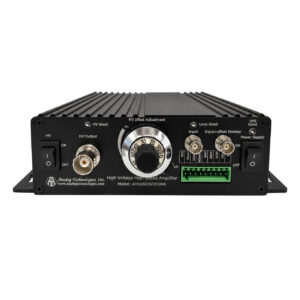
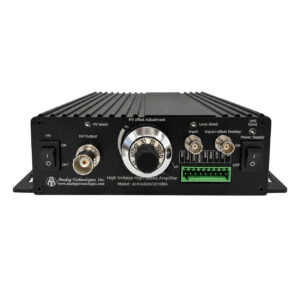
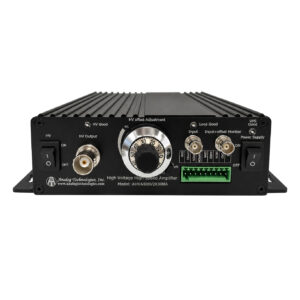
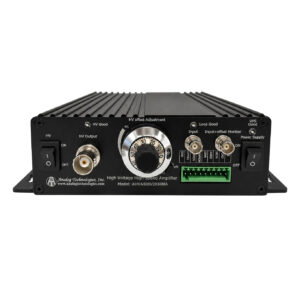
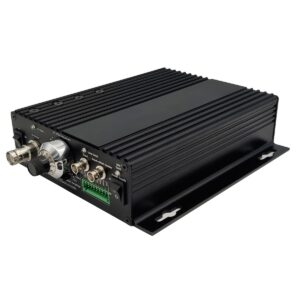
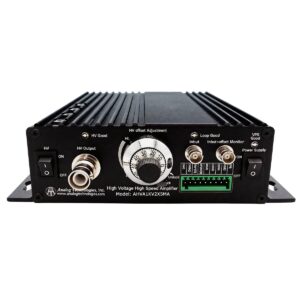
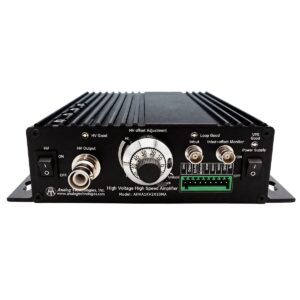
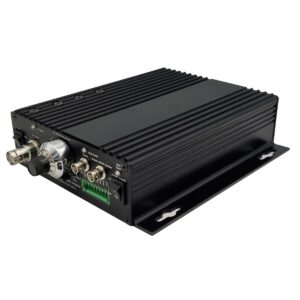
100 V to 2.5 kV · 5–100 mA positive, negative or bipolar · 100–2000 V/µs
Your load has to move or switch at high voltage. Piezo actuators, MEMS mirrors, electro-optic modulators, deflection plates. The high-voltage supply is built in, so the module runs from a 24 V rail.
A small analog signal that has to cross a galvanic barrier
750 to 2500 V rms isolation · 300–800 kHz DIP and SIP packages
Two circuits must not share a ground. Current shunt sensing, ground-loop breaking in data acquisition, floating measurements. Replacements for the AD202, AD210 and AD215 parts that Analog Devices has discontinued.
Very small noise voltages, raised to a level an instrument can read
gain 300× to 3,000,000× three filter bandwidths · battery powered · BNC output
You need to see noise an oscilloscope cannot resolve. Power supply ripple, low-noise circuit design, bench troubleshooting down to the nanovolt level.
Also worth knowing:
Both at once: Raising a signal and isolating it are two different jobs, and no single part in this section does both. Systems that need both use an isolation amplifier at the sensor and a high voltage amplifier at the load.
Custom: Different voltage, current or connector can be built to order in the high voltage family. Tell us what you need.
Questions we get asked
How do I choose between a high voltage amplifier and an isolation amplifier?
Decide by the problem, not by the voltage in your system. A high voltage amplifier produces a large output that drives a load. An isolation amplifier keeps the signal at a similar level and separates two grounds that must not be connected.
A 5 V signal sitting on a 400 V bus needs an isolation amplifier. A 5 V signal that has to become 400 V at the load needs a high voltage amplifier. The number that matters is different in each case.
What is the difference between gain written as a number and gain written in dB?
Both describe the same idea in different units. A gain written as 2× or 300× is a direct voltage ratio: 1 V in becomes 2 V out at a gain of 2×. A gain written in dB is a logarithmic ratio, and it is the normal unit in optical and RF work. In optical power terms, 10 dB is ten times the power, 20 dB is one hundred times, and 30 dB is one thousand times.
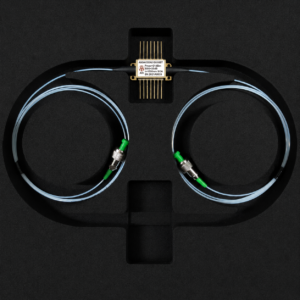
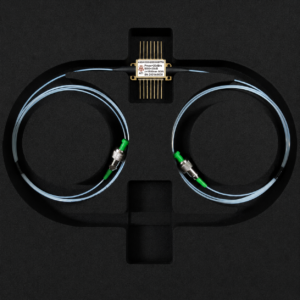
Our high voltage and noise measurement amplifiers use ratios. Our optical amplifiers use dB.
Does ATI supply audio or RF power amplifiers?
No. The amplifiers in this section are made for laboratory, test and instrument work. They handle DC and low-frequency signals up to a few tens of kilohertz, optical signals at 1550 nm, or very small noise voltages. They are not designed to drive loudspeakers or antennas.
If you need a high voltage output for a capacitive load such as a piezo element, the high voltage amplifiers are the right family.