
I/O Proportional HV Power Supplies
An I/O proportional high voltage power supply has no control pin. The output simply follows the input voltage you feed it — give it half your rail and you get half the rated output. Use one when you already have a variable or adjustable low-voltage supply and would rather not add a control circuit. If you want to set the voltage from a DAC or a fixed 12 V rail, use the DC-DC series instead.
25 models from $139, the least expensive way into high voltage in this catalogue. Five pins, only four of them connected, in a metal-enclosed DIP package, with input-to-output isolation of 3.5 kV as standard. Output starts responding from as little as 0.7 V in.
Find your I/O proportional power supply
Filter by output voltage and current. The pattern is simple: the higher the output voltage, the lower the current, because every model handles roughly the same power. How proportional control works is explained below if this is your first time using one.
Showing 13–24 of 25 resultsSorted by price: low to high
| Image | SKU | Output Voltage | Max. Current | Input Voltage | Package Type | Datasheet | Price | Stock | Action |
|---|---|---|---|---|---|---|---|---|---|
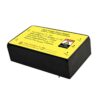 |
AHVR15V800V12R5MAP | 0 ~ 800V | 12.5mA | 0.7 ~ 15V | DIP | $157.00 | Made to Order | ||
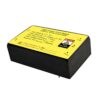 |
AHVR12V1KV10MAP | 0 ~ 1kV | 10mA | 0 ~ 12V | DIP | $159.00 | Made to Order | ||
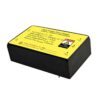 |
AHVR12V1200V8R3MAP | 0 ~ 1200V | 8.3mA | 0 ~ 12V | DIP | $159.00 | Made to Order | ||
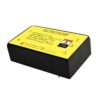 |
AHVR15V1KV10MAP | 0 ~ 1kV | 10mA | 0.7 ~ 15V | DIP | $159.00 | 3 | ||
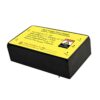 |
AHVR15V1200V8R3MAP | 0 ~ 1200V | 8.3mA | 0.7 ~ 15V | DIP | $159.00 | Made to Order | ||
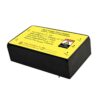 |
AHVR15V1500V6R6MAP | 0 ~ 1500V | 6.6mA | 0.7 ~ 15V | DIP | $162.00 | Made to Order | ||
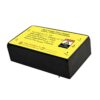 |
AHVR12V1500V6R6MAP | 0 ~ 1500V | 6.6mA | 0 ~ 12V | DIP | $165.00 | Made to Order | ||
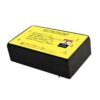 |
AHVR15V2KV5MAP | 0 ~ 2kV | 5mA | 0.7 ~ 15V | DIP | $167.00 | Made to Order | ||
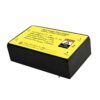 |
AHVR12V2KV5MAP | 0 ~ 2kV | 5mA | 0 ~ 12V | DIP | $169.00 | Made to Order | ||
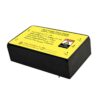 |
AHVR15V3KV3R3MAP | 0 ~ 3kV | 3.3mA | 0 ~ 15V | DIP | $175.00 | Made to Order | ||
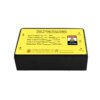 |
AHVR15V4KV2R5MAP | 0 ~ 4kV | 2.5mA | 0 ~ 15V | DIP | $185.00 | Made to Order | ||
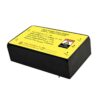 |
AHVR12V5KV2MAP | 0 ~ 5kV | 2mA | 0 ~ 12V | DIP | $199.00 | Made to Order |
Our Delivery Promise
Fast, flexible fulfillment from San Jose, California, USA — shipped worldwide.
- Fast in-stock shipping — In-stock orders ship within 1–2 business days after confirmation and quality check.
- Made-to-order models — Some models are produced to order. Contact sales@analogti.com for the current lead time.
- Worldwide shipping — Shipped from San Jose to customers worldwide.
- Flexible carrier options — UPS, FedEx, DHL, USPS, freight forwarders, or your preferred logistics partners.
- Clear shipment visibility — Tracking provided after dispatch to support your receiving and production planning.
How proportional control works
There are only four pins that matter, and no control electronics anywhere. This is the whole idea of the series, so it is worth two minutes.
- The input rail is the control. Feed a 12 V model with 12 V and you get its full rated output. Feed it 6 V and you get roughly half. There is no separate control pin, no reference voltage to generate, and nothing to program — the supply that powers the module also sets it.
- It starts working at 0.7 V. The turn-on threshold is low enough that you get useful output across almost the whole span of your rail, rather than losing the bottom few volts.
- Input and output are galvanically isolated to 3.5 kV. A quasi-sine-wave oscillator drives a fully enclosed transformer, so there is a real barrier between your low-voltage side and the high-voltage side. Very few supplies at this price have a specified isolation rating.
- It settles in about 260 ms. Slower than the DC-DC modules. Set it and leave it, rather than sweeping it.
- Five-sided metal enclosure. Low EMI, moisture and shock resistant, and small — roughly 71 × 43 × 22 mm and 145 g on a 500 V model. It drops into a board like an oversized DIP part.
Reading the part number:
- AHVR12V500V20MAP: R marks the proportional series, R12V means a 12 V input rail (R15V means 15 V), then output voltage, max current, and P for pin termination.
- Voltage and current trade against each other: 100 V at 100 mA, or 5 kV at 2 mA, and a steady progression in between. Pick the voltage you need and the current follows.
- Polarity: every model in this series is specified as a positive output. For a negative rail, use the N-coded models in the DC-DC series.
Questions about this series
My rail is a fixed, regulated 12 V. Can I still use these?
You can, but you would be buying a fixed-output high voltage supply, since the output only changes when the input does. If the voltage never needs to change, that is a perfectly good way to use it. If it does, either put an adjustable regulator in front of it or use a DC-DC module, which separates the control signal from the supply rail.
How accurate is the output?
Output voltage tolerance is around ±5% at full output and full load, with temperature stability of about ±1%. This series is built for simplicity and price rather than precision — if you need the output to be exactly what you asked for, the DC-DC or X-ray series are specified far more tightly.
What input current does it draw?
More than the output suggests, and this catches people out. A 500 V 20 mA model draws around 300 mA at no load and up to 1.3 A at full load. Size the low-voltage supply from the module datasheet, not from the high-voltage output power.
Does the isolation mean the output is floating?
The barrier between input and output is rated at 3.5 kV, which is what the datasheet specifies and what it is tested to. Do not treat that as licence to float the output far above ground — if your application needs the high-voltage side referenced somewhere unusual, describe the arrangement to us first and we will tell you whether the model you are considering is suitable.
Can you build a custom version?
Yes, for OEM quantities — different output voltage, current, input range or pin layout. Send us the rail you have available and the output you need.