
Switching Power Supplies
A switching power supply turns AC mains into a regulated low-voltage DC rail. Use one when you have something that runs on 12 V or 24 V DC and a wall socket to plug it into — a bench setup, an instrument rack, a test fixture, a machine on the shop floor. These are industrial enclosed supplies in a metal case with screw terminals, meant to be mounted inside equipment or on a panel — not desktop bricks with a barrel plug on the end.
ATI stocks 26 of them, 15 W to 600 W, in 12 V and 24 V, all with universal 90–264 VAC input. Prices are published, from $9.90, and all but one ship from stock in San Jose. They are here mainly so you can put the supply on the same order as the TEC controller, laser driver or high voltage module it is going to power.
Find your power supply
Every model in the table takes the same 90–264 VAC input, so the only two choices are voltage and wattage. Pick the voltage your load needs, then a wattage with room to spare — see how much headroom below. Part numbers read straight off the specs: ALRS24V10AT is 24 V at 10 A, and R stands in for a decimal point, so ALRS24VR65AT is 0.65 A.
Showing 25–26 of 26 resultsSorted by price: low to high
| Image | SKU | Output Voltage | Output Current | Output Power | Input Voltage | Datasheet | Price | Stock | Action |
|---|---|---|---|---|---|---|---|---|---|
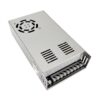 |
ALRS24V20AT | 24V | 20A | 480W | 90~264VAC | $33.00 | 6 | ||
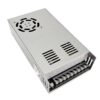 |
ALRS12V50AT | 12V | 50A | 600W | 90~264VAC | $36.00 | 28 |
Our Delivery Promise
Fast, flexible fulfillment from San Jose, California, USA — shipped worldwide.
- Fast in-stock shipping — In-stock orders ship within 1–2 business days after confirmation and quality check.
- Made-to-order models — Some models are produced to order. Contact sales@analogti.com for the current lead time.
- Worldwide shipping — Shipped from San Jose to customers worldwide.
- Flexible carrier options — UPS, FedEx, DHL, USPS, freight forwarders, or your preferred logistics partners.
- Clear shipment visibility — Tracking provided after dispatch to support your receiving and production planning.
12 V or 24 V?
Your load decides this, not you — check what it wants before anything else. If it will take either, the notes below are the tie-breakers.
| Output | Power range | Current range | Price | Choose this if… |
|---|---|---|---|---|
| 12 V 14 models · ALRS12V… | 15 – 600 W | 1.3 – 50 A | $9.90–$36.00 | Your load is 12 V nominal. This is what most benchtop electronics, cooling fans and our own low-voltage modules expect. |
| 24 V 12 models · ALRS24V… | 15 – 480 W | 0.65 – 20 A | $9.90–$33.00 | Your load is 24 V, or you are running a long cable. At the same wattage 24 V draws half the current, so voltage drop and wire gauge stop being a problem. |
Worth knowing before you choose
- The two voltages cost the same at every wattage they share, so 24 V is not a premium option. If your load takes either, choose on current and cable length rather than on price.
- The 24 V line stops at 480 W and has no 150 W model. If you need 600 W at 24 V, or exactly 150 W, tell us — we can look at what is available rather than pushing you to over-buy.
- All 26 take the same 90–264 VAC input, so one part number works on 110 V and 230 V mains without a link or a switch. Only the cord changes.
Not sure which one your equipment needs? Tell us the model you are powering and we will tell you the voltage and the wattage.
Three things to settle before you order
These are the questions that turn into returns when nobody asks them first.
1. How much headroom
Add up what your load actually draws, then buy a supply rated well above it. Running an enclosed supply flat out at its rated wattage makes it hot, makes the fan work, and shortens its life, so leaving 30 % or more in hand is normal practice. Watch the startup surge too: motors, lamps and anything with a big input capacitor pull far more current in the first moments than they do running. If the model you want is only one step up, take the next one after that — the price steps here are a dollar or two.
2. Voltage at the load, not at the terminals
The rated voltage is measured at the screw terminals. Down a long run at high current, a 12 V rail can arrive at the load noticeably lower, and a device with a tight input range will complain about it. Two easy fixes: go up a wire gauge, or run 24 V instead, which halves the current for the same wattage and roughly quarters the loss in the cable. Worth thinking about before you buy, because it can change which voltage you order.
3. Mains wiring is on you
These are open-frame style units in a metal case with screw terminals, not a sealed brick with a plug on the end. You supply the AC cord, wire live, neutral and earth to the terminal block yourself, and mount the case somewhere with airflow and no fingers. Earth the case. IP20 means the terminals are exposed — if the supply is going anywhere dusty, damp or reachable, it needs to live inside an enclosure.
Why buy these from ATI
Straight answer: not because they are special. They are commodity industrial supplies, and we source them rather than build them. What you get is the buying experience.
- One PO instead of two — If you are already ordering a TEC controller, a laser driver or a high voltage module from us, the supply that runs it goes on the same order, ships in the same box and clears the same approval. For a $12 part, that is usually worth more than the part.
- We know what our own products need — Ask which supply goes with which module and you get an answer, not a spec sheet. That is not something a distributor can do for you.
- Prices published, from $9.90 — No quote request, no minimum, no account setup. Purchasing can cost it out in a minute.
- A complete grid — 14 wattages at 12 V and 12 at 24 V means you can buy close to what you need instead of jumping from 100 W to 350 W.
- In stock in San Jose — 25 of the 26 on the shelf now, and a real person on the phone at (408) 748-9100 if you need to check before ordering.
Where these are used
Powering ATI modules
Our TEC controllers, laser drivers and high voltage modules run from 12 V or 24 V DC. These are the supplies we reach for when we build a demo, and the ones we recommend when a customer asks.
Benchtop and prototype work
A cheap, quiet, steady rail for a breadboard, an evaluation board or a test jig — without tying up a programmable lab supply that costs a hundred times as much.
Test fixtures and internal equipment
Production jigs, burn-in racks and in-house machines — equipment you build for your own floor, where you set the requirements and the supply just has to be reliable and cheap.
Repair and replacement
Swapping out a failed supply in equipment you already own. Match the voltage, match or exceed the wattage, check the mounting holes and the terminal layout.
LED lighting and displays
LED strip and sign work is the classic 12 V and 24 V load, and the reason the wattage grid runs all the way to 600 W.
Automation and shop-floor equipment
Sensors, relays, small actuators and controllers on a DIN panel, where a metal case and screw terminals are what you want anyway.
Frequently asked questions
Which one should I use with my TEC controller or laser driver?
It depends on the module and on the load it drives, and getting it wrong in either direction costs you — too small and the rail sags under load, too large and you paid for capacity you never use. Tell us the model number of the controller or driver and what it is driving, and we will name the supply. Since we make those modules, this is a question we can answer properly.
Do they work on 230 V mains as well as 110 V?
Yes. Every model here takes 90 to 264 VAC with no link to move and no switch to set, so the same part number works in North America, Europe and Asia. You supply the cord with the right plug on it. Note there is no power factor correction, which matters only if your local installation rules or your utility require it.
What happens if I overload one?
They protect themselves against short circuit, overload, over-voltage and over-temperature, so an accidental short on the bench should not destroy the supply. Protection is a safety net, not an operating mode — a supply that keeps hitting overload is undersized, and running it there will shorten its life even though it survives each event.
Are they noisy? Do they have a fan?
The higher-wattage models are fan-cooled, and on some the fan is controlled by temperature so it stays quiet until the supply is working hard. If the supply will sit next to someone all day, buy more wattage than you need — a lightly loaded supply runs cooler and quieter than one near its limit. Tell us the model you are considering if fan noise is a concern and we will check what it uses.
Can I wire two of them in parallel for more current?
Not reliably. These have no current-sharing provision, so two paralleled units will not split the load evenly — one ends up carrying most of it and running hot. If you need more current at one voltage, buy the single larger model. If you need two separate rails, use two supplies with their outputs kept separate.
How do I read the part number?
ALRS12V30AT breaks down as: ALRS is the series, 12V is the output voltage, 30A is the output current, and T means terminal block connections. An R inside the current field stands in for a decimal point, so ALRS24VR65AT is 0.65 A and ALRS12V12R5AT is 12.5 A. Multiply voltage by current and you have the wattage.