
Isolated DC-DC Converters
An isolated DC-DC converter takes one DC rail and produces another with no electrical connection between them. The output floats: it can sit at a different potential, break a ground loop, or keep a fault on one side from reaching the other. Use one when your load and your supply must not share a ground. If they can share one, an unisolated converter is smaller and cheaper — see our DC-DC high voltage power supplies instead.
ATI builds isolated modules with a 1500 V DC barrier between input and output. Most step a 12 V, 24 V or 48 V rail up to a high voltage output — 50 V to 600 V, or ±40 V to ±300 V bipolar — at 4 W to 60 W. The range also includes a low-voltage isolator and two converters that run the other way, taking a 210–1200 V DC bus down to a usable 12 V or 24 V rail.
Find your converter
Filter by input voltage, output voltage and current. Three things decide it: the rail you have, the voltage you need, and whether that output is positive, negative or bipolar. Part numbers read straight off those — ATMV12V300V100MA1 runs from a 12 V rail and gives 300 V at 100 mA, while PN in that position means a bipolar output and N means a negative one.
Showing 121–125 of 125 resultsSorted by price: low to high
| Image | SKU | Input Voltage | Output Voltage | Max. Current | Power | Efficiency | Datasheet | Price | Stock | Action |
|---|---|---|---|---|---|---|---|---|---|---|
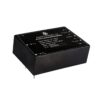 |
ATMV12VPN250V60MA2 | 10V ~ 18V | ±250V | ±60mA | 30W | 82% | $319.00 | Made to Order | ||
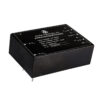 |
ATMV24VPN200V75MA2 | 20V ~ 36V | ±200V | ±75mA | 30W | 82% | $319.00 | Made to Order | ||
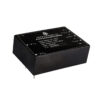 |
ATMV24VPN250V60MA2 | 20V ~ 36V | ±250V | ±60mA | 30W | 82% | $319.00 | Made to Order | ||
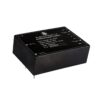 |
ATMV24V150V134MA1 | 20V ~ 36V | 150V | 134mA | 20W | 81% | $323.00 | Made to Order | ||
 |
ATMV24V300V200MA1 | 18V ~ 36V | 300V | 200mA | 60W | 78% | $699.00 | 1 |
Our Delivery Promise
Fast, flexible fulfillment from San Jose, California, USA — shipped worldwide.
- Fast in-stock shipping — In-stock orders ship within 1–2 business days after confirmation and quality check.
- Made-to-order models — Some models are produced to order. Contact sales@analogti.com for the current lead time.
- Worldwide shipping — Shipped from San Jose to customers worldwide.
- Flexible carrier options — UPS, FedEx, DHL, USPS, freight forwarders, or your preferred logistics partners.
- Clear shipment visibility — Tracking provided after dispatch to support your receiving and production planning.
Which way does your power need to go?
Three groups, split by what goes in and what comes out. Nearly all of the range is the first one.
| Group | Input | Output | Power | Price | Choose this if… |
|---|---|---|---|---|---|
| Low voltage in, high voltage out ATMV · 120 models | 12 V, 24 V or 48 V rail | 50 – 600 V, or ±40 – ±300 V | 4 – 60 W | $66–$699 | Almost everyone. You have a normal supply rail and need a floating high voltage for a PMT, a detector bias, an electrostatic element or a piezo stage. |
| High voltage in, low voltage out AIDCW · 2 models | 210 – 1200 V DC | 12 V or 24 V | 24 W | $65 | You need to run control electronics from a high voltage bus — a DC link, a battery stack, a solar string — without a separate low-voltage supply. |
| Low voltage in, low voltage out AIDC · 1 model | 4.5 – 5.5 V | 5 V | 1 W | $2.50 | You are breaking a ground loop rather than changing a voltage — isolating a sensor node, an interface or a floating measurement. |
Reading the part numbers
- ATMV12V300V100MA1 breaks down as: ATMV for the series, 12V for the input rail, 300V for the output, 100MA for the output current, and a trailing revision digit.
- PN and N change the polarity. ATMV12VPN100V150MA2 gives a bipolar ±100 V at ±150 mA from a single 12 V rail. ATMV48VN100V80MA1 gives a negative −100 V. Where neither letter appears, the output is positive.
- Every model isolates input from output at 1500 V DC. That is the rating of the barrier itself, and it is the same across the range, so it is not something you trade off when choosing between models here.
- Input is a range, not a single voltage. A model listed at 12 V accepts 10–18 V, and 24 V models accept 18–36 V, so a nominal rail that sags or a battery that drifts is already accounted for. Check the exact window in the table rather than assuming your rail sits inside it.
- Power, voltage and current trade against each other. Within one power class the current falls as the output voltage rises — a 30 W module gives 300 mA at 100 V or 60 mA at 500 V. Work out the watts you need first, then find the voltage and current combination inside that class.
Need an output voltage or a power level that is not in the table? Tell us the rail you have and the output you need and we will tell you what fits.
Three things to settle before you order
Isolation and polarity are decisions you make once and live with, so they are worth a few minutes now.
1. Do you actually need isolation?
Isolation earns its cost in three situations: your load sits at a different potential from your supply, you have a ground loop injecting noise into a measurement, or a fault on one side must not reach the other. If none of those apply — your high voltage output shares a ground with your input rail and always will — an unisolated converter does the same job in less space for less money, and our DC-DC high voltage power supplies are the place to look. Isolation is not a general upgrade; it is a specific feature that solves specific problems.
2. Positive, negative, or bipolar
A bipolar module gives you a matched pair of rails, plus and minus, from one input and in one package — the usual need for detector bias, analog front ends and anything driving in both directions. Two separate units would cost more, take more board area and give you two independent voltages that drift apart rather than one tracking pair. Where you need only one polarity, a single-output module costs less and wastes nothing. Read the polarity out of the part number before you order: PN is bipolar, N is negative, neither is positive.
3. Efficiency turns into heat
These run at 70 % to 90 % depending on the model, which is normal for isolated high voltage conversion — the transformer and the high voltage multiplier both take their share. The part that matters in practice is what happens to the remainder: a 30 W module at 80 % is dissipating around 7 W inside its own case. Check the efficiency figure for the specific model you are considering, work out the watts it will shed, and plan where that heat goes before the module is already mounted in a sealed box.
Why buy these from ATI
- The whole grid in one series — 120 ATMV models covering three input rails, outputs from 50 V to 600 V, bipolar pairs to ±300 V, and power classes from 4 W to 60 W. You can move up a voltage or down a power class without changing supplier or footprint family.
- Bipolar outputs as standard, not as a special — 48 of the models give a matched ± pair from a single rail. Most catalogues treat that as an unusual request.
- They pair with our isolation amplifiers — An isolation amplifier carries your signal across the barrier; one of these carries the power. Buying both from one place means the two halves of an isolated front end are specified against each other rather than assembled from two catalogues.
- Converters that run the other way — The AIDCW models take a 210–1200 V DC bus and give you 12 V or 24 V, which is an awkward gap to fill with standard parts and a common need wherever there is a high voltage link to sit on.
- Efficiency published per model — The figure is listed for each part rather than as a range for the series, so you can work out your thermal budget before you buy rather than after.
- Published prices, from $2.50 — No quote request. Purchasing can cost a design out in one sitting.
- Since 1997 — Designed and stocked in San Jose, California.
Where these are used
Photomultipliers and detectors
PMTs, APDs and similar detectors need a stable high voltage bias that floats relative to the readout electronics. This is the classic case for an isolated module rather than a shared-ground supply.
Biasing the floating side of an isolation barrier
Isolation amplifiers, gate drive circuits and high voltage front ends all have a side that sits at its own potential and still needs power. That is what these modules are for, and it is why they sit alongside our isolation amplifiers in most designs.
Analog front ends and data acquisition
Bipolar rails for instrumentation amplifiers, signal conditioning and per-channel isolated acquisition, so that supply noise and ground currents stay out of the measurement.
Piezo and electrostatic drives
Piezo actuators, deformable mirrors and electrostatic elements need hundreds of volts at modest current — exactly the shape of these modules.
Powering electronics from a high voltage bus
Control and monitoring circuits that live on a DC link, a battery stack or a solar string, where the AIDCW modules provide a low-voltage rail without running a separate supply to the location.
Breaking ground loops
Isolating a sensor node, an interface or a floating measurement from the rest of the system, where the point is the barrier rather than the voltage change.
Test and laboratory equipment
Instruments that must present a floating output, or that measure something at a potential different from their own chassis ground.
Frequently asked questions
What does isolated actually mean here?
There is no conductive path between the input and the output. Power crosses a transformer rather than a wire, so the output has no fixed relationship to the input ground and can be referenced wherever your circuit needs it. The barrier is rated at 1500 V DC, which is what the input and output sides may differ by. That rating is what lets the output float at a different potential, what stops ground currents circulating between two parts of a system, and what keeps a fault on one side from propagating to the other.
How do I choose between this category and DC-DC high voltage power supplies?
By whether you need the barrier. The modules on this page isolate input from output; the DC-DC high voltage power supplies do not, and they are smaller and less expensive as a result. If your high voltage output shares a ground with your input rail and always will, you do not need what you would be paying for here. If it sits at a different potential, or if a ground loop is corrupting a measurement, or if a fault has to be contained on one side, isolation is the reason to be here.
Why is a bipolar module better than two single-output ones?
One input, one package, one pair of rails that move together. Two separate modules cost more, occupy more board area, and give you two independently regulated voltages that drift apart with temperature and load — which is precisely what a bipolar analog front end does not want. Where you need a matched plus and minus, a bipolar module is the simpler answer. Where you need only one polarity, buy a single-output part and do not pay for the other rail.
Why is the efficiency lower than an ordinary DC-DC converter?
Two reasons stack up. Isolation means the energy crosses a transformer, and a transformer has losses that a direct connection does not. Generating hundreds of volts from a 12 V rail means a large step-up ratio and, in most designs, a multiplier stage, and each of those takes a share. Seventy to ninety per cent is normal for this class of part. What matters is not the number itself but the heat behind it, so read the figure for the specific model and budget for the watts it will shed.
Can I run one below its rated current, or with no load at all?
Running below the rating is normal and is the usual way to keep a module cool and long-lived. No load at all is a different question and depends on the model, since some converters need a minimum load to regulate properly and will let the output rise above the nominal value without one. If your load switches off completely or draws almost nothing in standby, ask us about the specific part before you design it in.
What input voltage range does a 12 V model accept?
Ten to eighteen volts, so a nominal 12 V rail has room to sag or rise without the output following it. The 24 V models accept eighteen to thirty-six volts and the 48 V model accepts thirty-six to seventy-two. Those windows are wide enough for most battery and rail variation, but check the exact figure in the table for the model you are considering rather than assuming a nominal number describes it.
Can I connect two outputs in series or parallel?
Not without checking with us first. Series connection puts one module's output at the other's potential, which is exactly the sort of thing the isolation barrier makes possible but which depends on the barrier rating of the specific parts. Paralleling raises the separate question of current sharing, which these are not designed to do. If you need more voltage or more current than one model provides, tell us what you are trying to reach and we will point you at the right part rather than a workaround.