
High Voltage Power Supplies
A high voltage power supply takes an ordinary 12 V rail or a wall socket and holds a steady high voltage — hundreds to tens of thousands of volts. Use one when your load needs to sit at a voltage: an X-ray tube, a photomultiplier, an electrostatic plate, a capacitor bank. If the voltage has to follow a waveform or switch quickly, you want a high voltage amplifier instead.
ATI builds five series, 307 models, from 100 V to 60 kV, starting at $79. Most are compact modules in a metal enclosure that mount inside your equipment and run from 5, 12, 24 or 30 V. The range also includes benchtop instruments with a dial and a display, and X-ray supplies with programmable voltage and current.
Showing 281–300 of 307 resultsSorted by price: low to high
-
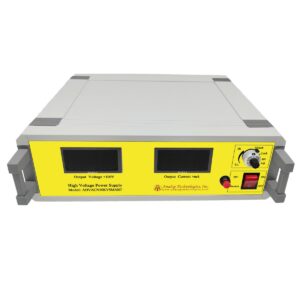
AHVACN10KV5MABT −10kV 5mA AC DC HV Power Supply (90 ~ 230V Input)
$1,599.00 -
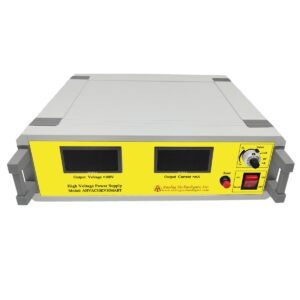
AHVAC10KV10MABT 10kV 10mA AC DC HV Power Supply (90 ~ 230V Input)
$1,699.00 -
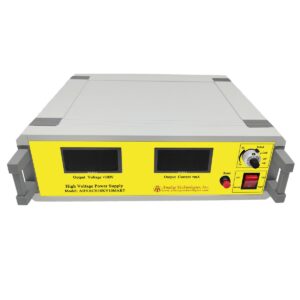
AHVACN10KV10MABT −10kV 10mA AC DC HV Power Supply (90 ~ 230V Input)
$1,699.00 -
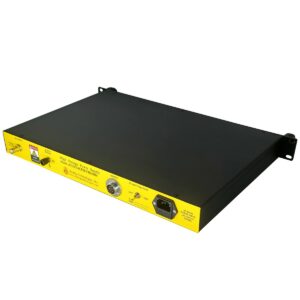
A1UHVACP5KV4MARM 5kV 4mA AC DC HV Power Supply (110V / 220V Input)
$1,839.00 -
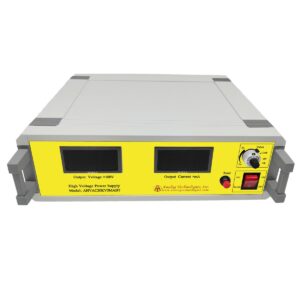
AHVAC20KV5MABT 20kV 5mA AC DC HV Power Supply (90 ~ 230V Input)
$1,899.00 -
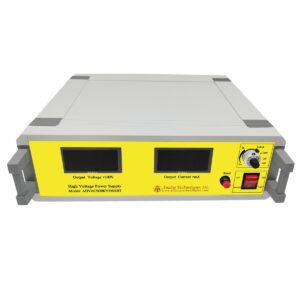
AHVACN20KV5MABT −20kV 5mA AC DC HV Power Supply (90 ~ 230V Input)
$1,899.00 -
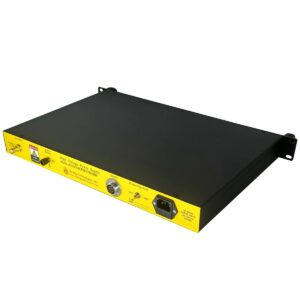
A1UHVACP5KV5MARM 5kV 5mA AC DC HV Power Supply (110V / 220V Input)
$1,899.00 -
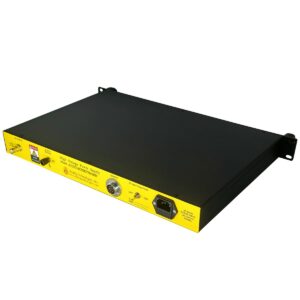
A1UHVACN5KV5MARM 5kV 5mA AC DC HV Power Supply (110V / 220V Input)
$1,899.00 -
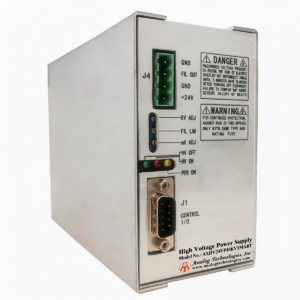
AXHV24VP10KV1MABT 10kV 1mA HV Power Supply (23 ~ 25V Input)
$1,999.00 -
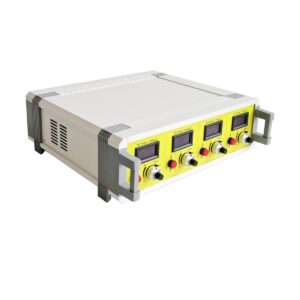
AHVACPN5KV1MABT4 ±5kV 1mA AC DC HV Power Supply (90 ~ 230V Input)
$1,999.00 -
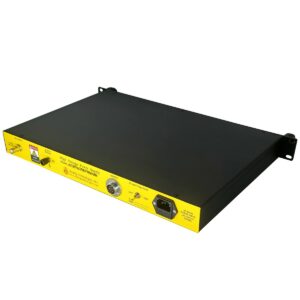
A1UHVACP1KV50MARM 1kV 50mA AC DC HV Power Supply (110V / 220V Input)
$2,299.00 -
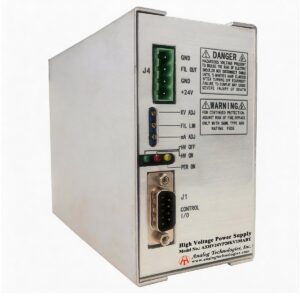
AXHV24VP20KV1MABT 20kV 1mA HV Power Supply (23 ~ 25V Input)
$2,399.00 -
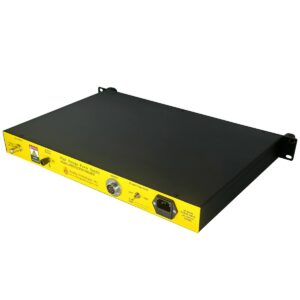
A1UHVACP5KV10MARM 5kV 10mA AC DC HV Power Supply (110V / 220V Input)
$2,399.00 -
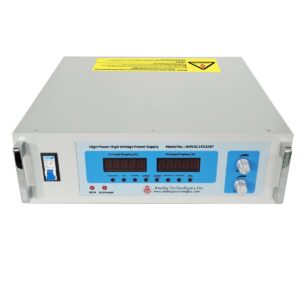
AHVAC1KV2ABT 1kV 2A AC DC HV Power Supply (220 ~ 240V Input)
$2,399.00 -
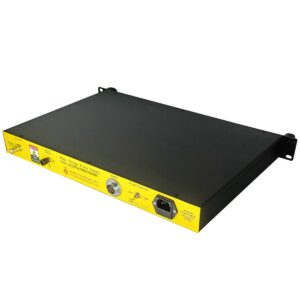
A1UHVACP10KV5MARM 10kV 5mA AC DC HV Power Supply (110V / 220V Input)
$2,499.00 -
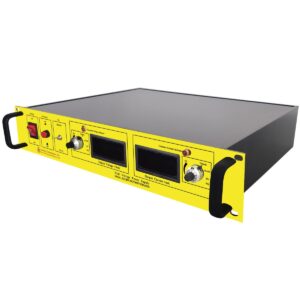
A2UHVACP10KV10MARM 10kV 10mA AC DC HV Power Supply (220V ~ 240V Input)
$2,599.00 -
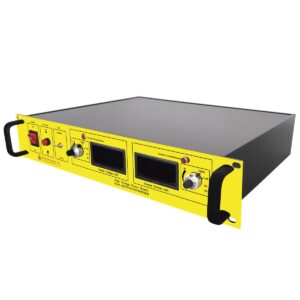
A2UHVACP1KV300MARM 1kV 300mA AC DC HV Power Supply (110V / 220V Input)
$2,899.00 -
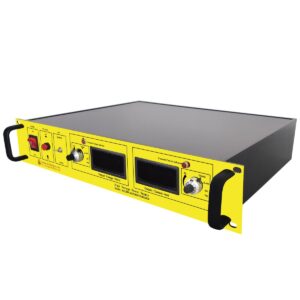
A2UHVACP20KV10MARM 20kV 10mA AC DC HV Power Supply (220V ~ 240V Input)
$3,199.00 -
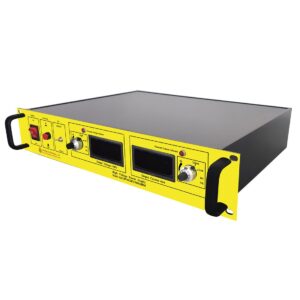
A2UHVAC3KV50MAIRM 3kV 50mA AC DC HV Power Supply (110V / 220V Input)
$3,399.00 -
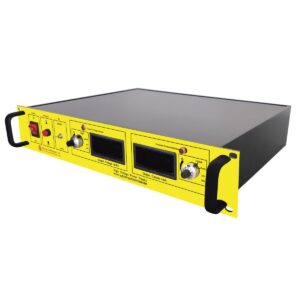
A2UHVACP10KV25MARM 10kV 25mA AC DC HV Power Supply (220V ~ 240V Input)
$3,399.00
Our Delivery Promise
Fast, flexible fulfillment from San Jose, California, USA — shipped worldwide.
- Fast in-stock shipping — In-stock orders ship within 1–2 business days after confirmation and quality check.
- Made-to-order models — Some models are produced to order. Contact sales@analogti.com for the current lead time.
- Worldwide shipping — Shipped from San Jose to customers worldwide.
- Flexible carrier options — UPS, FedEx, DHL, USPS, freight forwarders, or your preferred logistics partners.
- Clear shipment visibility — Tracking provided after dispatch to support your receiving and production planning.
Which series do I need?
Five series. The question that separates them is not how many volts — most of them reach high voltage — but how you tell the supply what voltage to produce. Pick the row that matches how your system works, then open that series to filter by voltage and current.
| Series | Output | Max current | How you set the voltage | Runs from | Choose this if… |
|---|---|---|---|---|---|
| DC-DC 218 models · $119–$869 | ±500 V to ±60 kV | up to 50 mA | 0–5 V control pin plus 5 V reference and shutdown pin |
5 · 12 · 24 · 30 V | This is the one most people need. A sealed metal module you build into your instrument. Feed it a 0–5 V signal from a DAC or a potentiometer and the output follows, scaled up. Positive and negative versions of nearly every model. |
| AC-DC 54 models · $79–$5,699 | ±500 V to ±60 kV | up to 2 A | Front-panel dial and display rack units also take remote adjustment |
AC line | You want a finished instrument, not a module. Plugs into the wall, set the voltage by hand, read it off the display, lock the dial so nobody nudges it. Benchtop, 1U and 2U rack versions. Highest current in the range. The benchtop units are front-panel only; the rack versions accept remote adjustment. |
| I/O Proportional 25 models · $139–$199 | 100 V to 5 kV | up to 100 mA | The input rail itself no control pin at all |
0.7–12 V · 0.7–15 V | You already have a variable low-voltage rail. Output tracks the supply voltage directly, starting from 0.7 V in. Five pins, only four of them connected, no control circuitry, cheapest per volt. Input and output are galvanically isolated to 3.5 kV. |
| Capacitor Charging 7 models · $169–$539 | 3 kV to 23 kV | 1–10 mA constant current |
0–5 V control pin sets the target voltage |
12 · 24 V | You are charging a capacitor bank. The output current is held constant, so the bank charges on a predictable ramp instead of drawing a huge surge at the start. Two models are isolated — they carry an I in the part code, rated at 5 kV and 13 kV. A general-purpose supply will current-limit or fault into the same load. |
| X-Ray 3 models · $1,999–$3,699 | 10 kV to 50 kV | 1 mA | Local dial or remote 0–10 V voltage and current programmed separately |
24 V | You are driving an X-ray tube. Integrated adjustable filament supply, separate voltage and current programming with monitor outputs, and a safety interlock. Output drift stays under 0.01% per hour after warm-up. |
Also worth knowing:
- Polarity is a separate part number: negative-only versions carry an N in the code; PN versions are adjustable across both polarities from one output. Every model in the I/O Proportional series is specified as a positive output.
- W or P: DC-DC part numbers ending in W come with flying lead wires; P versions have pins for a PCB. Same electrical specification.
- Custom: different voltage, current, connector or enclosure can be built for OEM quantities, and volume pricing applies well below that. Tell us what you need.
How fast, how stable, how hot?
Three numbers decide whether these suit your application. We would rather you know them now than after the unit arrives.
- They are not fast. The module series accepts a control signal up to about 12 Hz. The output takes roughly 50 ms to rise and 100 ms to fall. That is fine for setting a bias and leaving it, or slowly sweeping a voltage. It is not enough to reproduce a waveform — for that you need a high voltage amplifier, which goes up to 2000 V/µs.
- Drift is real on the module series. Up to 0.5% per minute short term and 1% per hour long term. For an electrostatic plate or a general bias this is invisible. If you are holding a calibrated voltage for hours, it is not — use the X-ray series, which is specified at under 0.01% per hour, or plan on measuring and correcting.
- Efficiency is ≥70% at full load, so plan for the heat. A module delivering 30 W is drawing about 43 W from the input rail and dissipating the remaining 13 W inside a sealed metal box. Mount it flat against a metal plate — the enclosure is the heatsink — and keep the surface below 55 °C. Ventilation matters more than most people expect at this power level.
- Ripple varies by model. Around 0.05% peak-to-peak on the DC-DC and capacitor charging modules, and under 0.1% on the X-ray supplies. Check the datasheet for the exact model if ripple matters to your measurement.
Not sure whether the numbers above work for your application? Ask engineering — send the load, the voltage and how quickly it needs to change.
Why buy from ATI
Six reasons customers pick these over a catalogue high voltage brick.
- 307 models, so you buy what you need. Voltage in real steps from 100 V to 60 kV, current from 0.1 mA to 2 A, positive and negative throughout. You are not paying for headroom you will never use, and you are not designing around the nearest available part.
- Prices are published. From $79 to $5,699, listed on every product page, with volume pricing on request. High voltage is an area where most suppliers make you ask — you can budget from this page.
- The control interface is already built in. DC-DC modules give you a 0–5 V control pin, a 5 V reference output to drive it from, and an electronic shutdown pin. No external programming circuit, no separate reference to specify.
- Sealed metal enclosure. The module series is fully enclosed in metal for low EMI and to give the internals a thermal path. It mounts inside your instrument rather than sitting beside it, which is the difference between a product and a lab setup.
- Protection is standard, not an option. What is covered is specified per series: the DC-DC modules carry over-current protection with over-voltage and under-voltage lockout, the I/O Proportional series adds overload and short-circuit protection, and the X-ray supplies specify arc and short-circuit protection alongside a safety interlock. The CO2 laser units carry open-circuit protection instead, which guards the supply if the laser tube ruptures.
- We answer selection questions. Load, voltage, current, how fast it must change, how stable it must stay. Tell us those four and we will name the part, or tell you that a different product suits you better.
- RoHS and REACH compliant — Every unit is 100 % lead-free, and the certificates are on file: RoHS certificate and REACH certificate of compliance.
What people use these for
Anything that needs a controlled voltage of hundreds or thousands of volts, held steady.
- High voltage testing — insulation and breakdown testing, withstand testing, component qualification. The largest single use of this range.
- Electrostatic generation — electrostatic chucks, precipitators, coating and flocking, electrospinning of nanofibre.
- Photomultiplier and APD bias — stable negative or positive bias for detectors in spectroscopy, particle physics and medical imaging.
- X-ray systems — tube bias for imaging, inspection, thickness gauging, XRF and PCB inspection.
- Capacitor charging and pulse power — energy storage banks, discharge circuits, pulsed systems.
- Vacuum and thin film — DC reactive magnetron sputtering, physical vapour deposition, plasma bias.
- Analytical instruments — capillary electrophoresis, mass spectrometry ion optics, particle injection.
- Piezo and electrostatic actuators — where the actuator holds a position rather than tracking a signal. If it has to move continuously, use a high voltage amplifier.
Questions we get asked
What is the difference between a high voltage power supply and a high voltage amplifier?
A power supply holds one voltage. You set it and it stays there. An amplifier follows your control signal continuously and changes with it.
If your load needs to move, switch or track a waveform, buy an amplifier. If it just needs to sit at a voltage, buy a supply — it costs considerably less.
How do I set the output voltage?
It depends on the series. DC-DC and capacitor charging modules take a 0–5 V signal on a control pin, from a DAC or a simple potentiometer, and multiply it up. The benchtop AC-DC units have a ten-turn dial and a digital display on the front panel. X-ray supplies accept a local dial or a remote 0–10 V program, with voltage and current set separately.
The I/O Proportional series has no control pin — the output simply tracks whatever you feed the input.
How quickly can the output change?
Not quickly. The modules accept control signals up to about 12 Hz; the output takes around 50 ms to rise and 100 ms to fall. Rise and fall are different because the supply can push current into the load on the way up, but on the way down it can only stop and let the load drain the output capacitance.
If you need to follow a waveform, you need an amplifier, not a supply.
Do I order a different part for negative output?
Yes. Polarity is set by the part number. Negative-only versions carry an N in the model code — AHV12VN1KV1MAW is the −1 kV counterpart of AHV12V1KV1MAW.
If you need either polarity from one unit, look for PN in the code. These give a single output adjustable from 0 to the rated voltage in either polarity. The DC-DC series has models such as AHV12VPN1KV1MAW at ±1 kV, and the AC-DC series reaches ±5 kV with the benchtop AHVACPN5KV1MABT4. The I/O Proportional series is positive output only.
The PN models hold whatever voltage you set them to. If the output has to follow a control signal and sweep through zero continuously, that is a bipolar amplifier — the difference is speed, not polarity.
How much heat will it produce, and do I need a heatsink?
Efficiency is at least 70% at full load, so budget for roughly 40% of the output power as heat inside the unit. The metal enclosure is the heatsink — mount the module flat against a metal plate with good contact, and provide enough ventilation to keep the surface below 55 °C.
Is the output isolated from the input?
On some series, and the rating is specified per model rather than per series.
The I/O Proportional modules are galvanically isolated to 3.5 kV throughout. In the capacitor charging series, two models carry an I in the part code — ACCHV12V3KV10MAIW at 5 kV and ACCHV12V10KV2MAIW at 13 kV. In the AC-DC series, rack units with an I before the RM have isolated outputs, rated at 5 kV on A2UHVAC3KV50MAIRM.
Everything else is not specified for isolation, so check the datasheet for the exact part rather than assuming a barrier is there.
Can I charge a capacitor bank with a normal high voltage supply?
Usually badly. An empty capacitor looks like a short circuit, so a normal supply hits its current limit, folds back or faults.
The capacitor charging series holds the output current constant instead, so the bank charges on a straight predictable ramp and the supply never sees a fault condition. If you are charging repeatedly, this is the series to use.
What protection is built in?
It depends on the series, so check the datasheet for the model you are considering. The DC-DC modules carry over-current protection with over-voltage and under-voltage lockout. The I/O Proportional series adds overload and short-circuit protection. The X-ray supplies specify arc and short-circuit protection alongside over-current protection, plus a safety interlock. The CO2 laser units are the exception: they carry open-circuit protection, which shuts the supply down if the laser tube ruptures.
None of that makes a shorted high-voltage output safe. Treat protection as a second line of defence, not a design allowance.
How stable is the output over time?
The module and benchtop series are specified at up to 0.5% per minute short term and 1% per hour long term, with a temperature coefficient of 0.01–0.05% per °C. That is fine for bias and testing work.
If you need a calibrated voltage held for hours, the X-ray series is specified under 0.01% per hour with a 25 ppm/°C coefficient — and it is worth telling us what accuracy you actually need, because the answer changes the recommendation.
Can you build a custom version?
Yes. Different output voltage, current, connector type or enclosure are all possible for OEM quantities. Send us the output you need, the input rail available, the control interface you would prefer and any size limits.