
DC-DC HV Power Supplies
A DC-DC high voltage power supply runs from the low-voltage rail you already have — 12 V or 24 V for almost every model — and gives you up to 60 kV out, set by a 0–5 V control signal. This is the series to build into an instrument. If you want something that plugs into the wall with a dial on the front, look at the AC-DC series instead.
218 models from $119. Sealed metal modules, positive and negative, with the control interface built in — a 0–5 V input, a 5 V reference to drive it from, and an electronic shutdown pin. Nothing external to design.
Find your DC-DC high voltage power supply
Filter by input voltage, output voltage, current, polarity and package. Almost every model runs from 12 V or 24 V — 12 V models reach 30 kV, 24 V models reach 60 kV. There is also a single 5 V model and a single 30 V model if that is the rail you have. Not sure how to drive the control pin? There is a short guide below.
Showing 157–168 of 218 resultsSorted by price: low to high
| Image | SKU | Output Voltage | Max. Current | Input Voltage | Package Type | Datasheet | Price | Stock | Action |
|---|---|---|---|---|---|---|---|---|---|
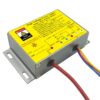 |
AHV12VN2KV10MAW | -2kV | 10mA | 11V ~ 13V | Lead Wire | $199.00 | 2 | ||
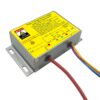 |
AHV12VN5KV4MAW | -5kV | 4mA | 11V ~ 13V | Lead Wire | $199.00 | 8 | ||
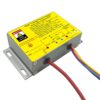 |
AHV12VN6KV3MAW | -6kV | 3mA | 11V ~ 13V | Lead Wire | $199.00 | 2 | ||
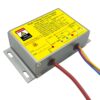 |
AHV12VN10KV1MAW | -10kV | 1mA | 11V ~ 13V | Lead Wire | $199.00 | 51 | ||
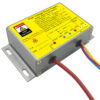 |
AHV24V1KV20MAW | 1kV | 20mA | 23V ~ 25V | Lead Wire | $199.00 | 22 | ||
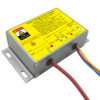 |
AHV24V2KV10MAW | 2kV | 10mA | 23V ~ 25V | Lead Wire | $199.00 | 7 | ||
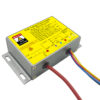 |
AHV24V5KV4MAW | 5kV | 4mA | 23V ~ 25V | Lead Wire | $199.00 | 5 | ||
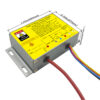 |
AHV24V10KV1MAW | 10kV | 1mA | 23V ~ 25V | Lead Wire | $199.00 | 11 | ||
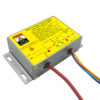 |
AHV24VN1KV20MAW | -1kV | 20mA | 23V ~ 25V | Lead Wire | $199.00 | 2 | ||
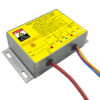 |
AHV24VN2KV10MAW | -2kV | 10mA | 23V ~ 25V | Lead Wire | $199.00 | 2 | ||
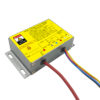 |
AHV24VN5KV4MAW | -5kV | 4mA | 23V ~ 25V | Lead Wire | $199.00 | 3 | ||
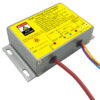 |
AHV24VN6KV3MAW | -6kV | 3mA | 23V ~ 25V | Lead Wire | $199.00 | 2 |
Our Delivery Promise
Fast, flexible fulfillment from San Jose, California, USA — shipped worldwide.
- Fast in-stock shipping — In-stock orders ship within 1–2 business days after confirmation and quality check.
- Made-to-order models — Some models are produced to order. Contact sales@analogti.com for the current lead time.
- Worldwide shipping — Shipped from San Jose to customers worldwide.
- Flexible carrier options — UPS, FedEx, DHL, USPS, freight forwarders, or your preferred logistics partners.
- Clear shipment visibility — Tracking provided after dispatch to support your receiving and production planning.
Our Delivery Promise
Fast, flexible fulfillment from San Jose, California, USA — shipped worldwide.
- Fast in-stock shipping — In-stock orders ship within 1–2 business days after confirmation and quality check.
- Made-to-order production — Higher-voltage models are often built to order. Contact us for the current lead time before you plan your schedule.
- Worldwide shipping — Shipped from San Jose to customers worldwide.
- Flexible carrier options — UPS, FedEx, DHL, USPS, freight forwarders, or your preferred logistics partners.
- Clear shipment visibility — Tracking provided after dispatch to support your receiving and production planning.
How to set the output voltage
Six wires on most models, and only three of them do anything interesting. This is the part people ask about most, so here it is in full.
- CTRL sets the output, 0 to 5 V. The module multiplies it by a fixed factor. A 500 V model outputs 100 × the control voltage; a 3 kV model outputs 600 ×. So the factor is always the model’s rated voltage divided by 5 — feed it 5 V and you get the full rating, feed it 2.5 V and you get half.
- The 5 V reference is there so you do not need one. Wire a 10 kΩ potentiometer across the module’s own 5 V reference output and take the wiper to CTRL. That is a complete, stable voltage setting circuit with one component. Driving CTRL from a DAC works the same way.
- SDN turns it off electronically. Pull it below 0.8 V to shut down, above 1.2 V or leave it floating to run. Never apply more than 5 V. This is how you kill the high voltage from a microcontroller or an interlock without switching the input rail.
- The highest-voltage models add a seventh wire. A 0–5 V output voltage monitor, so the output can be read back on the low-voltage side. The rest of the series has six. Check the wire table in the datasheet for the part you are considering.
- Keep control signals slow. CTRL accepts up to about 12 Hz. Output rise is roughly 50 ms and fall roughly 100 ms — fall is slower because the module can only stop pushing current and let the load drain the output capacitance. See how fast, how stable, how hot on the main category page before you design around these numbers.
- Mount it to metal. The enclosure is the heatsink. Bolt it flat against a plate with real contact area and keep the surface under 55 °C.
Reading the part number:
- AHV12V3KV5MAW: input rail · output voltage · max current · termination.
- W or P: W has flying lead wires, P has pins for a board. Same electrical specification, and W accounts for almost every model in this series.
- N in the code: marks a negative-output model. AHV12VN1KV1MAW is the −1 kV version of AHV12V1KV1MAW.
- PN in the code: marks a bipolar model — one output, adjustable from zero to the rated voltage in either polarity. AHV12VPN1KV1MAW is the ±1 kV version. Filter by polarity to see which ratings are available as PN.
Questions about this series
Which input rail should I choose?
Whichever your system already has. 12 V and 24 V cover 216 of the 218 models and are equivalent up to 30 kV, with no performance advantage either way.
Above 30 kV the choice is made for you — those models are 24 V only, up to 60 kV.
Two models sit outside the pair: AHV5V3KV1MAW runs from a 5 V rail to 3 kV, and AHV30V18KVR5MAW runs from 30 V to 18 kV. Filter by input voltage to find them.
What supply current does the input rail need?
Much more than the output suggests. A 500 V 1 mA module draws only 0.5 W at the output but pulls up to 70 mA at 12 V, and higher-power models draw amps. Size the low-voltage supply from the module datasheet, never from the high-voltage output power.
Input voltage tolerance is narrow — 11 to 13 V on a 12 V model — so a well-regulated rail is worth using.
Is the high voltage output isolated from the input?
Not on this series. These datasheets do not specify an input-to-output isolation rating, so do not assume a barrier is present — and do not infer one from the package type.
Three options are specified for isolation:
- I/O Proportional HV Power Supplies — 3.5 kV input-to-output, with the output tracking a control signal.
- Isolated DC-DC Converters — 1500 V DC barrier, 50 V to 600 V or ±40 V to ±300 V bipolar, 4 W to 60 W from a 12 V, 24 V or 48 V rail.
- ACCHV12V10KV2MAIW — the one isolated model in the capacitor charging range. 12 V in, 10 kV out at 2 mA, with a 13 kV DC isolation rating.
Need isolation on a model that does not have it? Tell us what you need to isolate — we build custom versions, and we can recommend the closest standard part.
What happens if the output is shorted?
The modules include over-current protection along with over-voltage and under-voltage lockout, and the instantaneous short-circuit current is limited. The limit is specified per model rather than across the series, so take the figure from the datasheet for the part you are using.
That is a safety net, not a design allowance — a sustained short at the output should always be avoided, and the high-voltage wiring needs insulation appropriate to the model’s rating.
Can I get a version with a different voltage or connector?
Yes, for OEM quantities. Output voltage, current, termination style and enclosure can all be changed. Send us the output you need, the input rail available and any size limits.