
High Voltage Amplifiers
A high voltage amplifier takes a small control signal and reproduces it at high voltage. Use one when your load has to move, switch or follow a waveform — a piezo actuator, a MEMS mirror, an electro-optic modulator. If it only needs to sit at a fixed voltage, a power supply is enough.
ATI builds these as compact modules you can mount inside your equipment, from 100 V to 2.5 kV, starting at $340. The high-voltage supply is already built in, so the module runs from an ordinary 24 V rail. Bench-top amplifiers with similar output typically cost several times more and sit outside your system.
Find your high voltage amplifier
Filter by output voltage, current and polarity. Every row shows speed, connector, size, price and datasheet. Not sure what you need? The series guide below narrows it to one family, and we are happy to size it with you if the load is unusual.
Showing 25–28 of 28 resultsSorted by price: low to high
| Image | SKU | Output Voltage | Max. Current | Slew Rate | Output Connector | Dimensions | Datasheet | Price | Stock | Action |
|---|---|---|---|---|---|---|---|---|---|---|
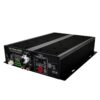 |
AHVAPN1800V20MABN | -1800V~1800V | 20 mA | 2000 V/us | Banana | 306.5×230×61 | $1,800.00 | 1 | ||
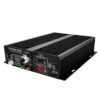 |
AHVAPN2000V20MABN | -2kV~2kV | 20 mA | 2000 V/us | Banana | 306.5×230×61 | $1,999.00 | Made to Order | ||
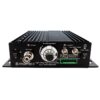 |
AHVAN2R5KV20MA | -10V~-2.5kV | 20 mA | 100 V/us | SHV | 191.5×147×41.2 | $2,600.00 | Out of Stock | ||
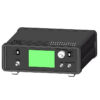 |
AHVA2000V20MA | 0V~2kV | 20 mA | 200 V/us | Front panel | 230×252×85 | $3,500.00 | Out of Stock |
Our Delivery Promise
Fast, flexible fulfillment from San Jose, California, USA — shipped worldwide.
- Fast in-stock shipping — In-stock orders ship within 1–2 business days after confirmation and quality check.
- Made-to-order production — Most models in this category are built to order. Contact us for the current lead time before you plan your schedule.
- Worldwide shipping — Shipped from San Jose to customers worldwide.
- Flexible carrier options — UPS, FedEx, DHL, USPS, freight forwarders, or your preferred logistics partners.
- Clear shipment visibility — Tracking provided after dispatch to support your receiving and production planning.
Which series do I need?
Four series, sorted by what your load needs. Pick one, then use the filter above for the exact voltage and current.
| Series | Output | Max current | Speed | Bandwidth | Choose this if… |
|---|---|---|---|---|---|
| AHVA 21 models · $340–$1,400 | +100 V to +2 kV positive |
up to 100 mA | 100–150 V/µs | 10 kHz | This is the one most people need. Five voltage levels, five current levels. Best for driving piezo actuators and holding a position. Highest current in the range at 100 mA. |
| AHVAPN 3 models · from $1,500 | −2 kV to +2 kV bipolar, swings through zero |
20 mA | 2000 V/µs | 15 kHz | You need speed, or you need both polarities. Square waves, fast steps, optical switching. 20× faster than the AHVA series, and the output crosses zero with no switching hardware. |
| AHVAN 3 models · $1,099–$2,600 | −1 kV to −2.5 kV negative |
20 mA | 100 V/µs | 10 kHz | You only need negative voltage. Photomultipliers, ion optics, electrostatic bias. Goes to −2.5 kV — the widest single-polarity swing we make. |
| AHVA2000V20MA benchtop · $3,500 | +2 kV positive |
20 mA | 200 V/µs | 20 kHz | You want a finished instrument. Plugs into the wall — no 24 V supply to arrange. Good for labs and one-off experiments, where 20 kHz gives the widest bandwidth in the range. |
Also worth knowing:
- SMA: AHVA1KV2X20MASMA is identical to AHVA1KV2X20MA except the two signal ports use SMA instead of Mini-BNC. The high-voltage output is SHV on both.
- Custom: Different voltage, current or connector can be built to order. Tell us what you need.
How much current do I need?
This is the question people get wrong most often. Piezo actuators and most high-voltage loads are capacitors — the faster you change the voltage, the more current they pull. Voltage rating alone will not tell you which model to buy.
Required current depends on your load capacitance, the voltage swing and the operating frequency together. The relationship is not a simple one, so the capacitive-load curves in each model’s datasheet are the reliable reference — not a rule of thumb.
Send us your load capacitance, voltage swing and operating frequency and we will tell you which model works. Contact engineering, or filter by Max Output Current if you already know the figure you need.
Why buy from ATI
Seven reasons customers pick these over bench-top amplifiers.
- The high-voltage supply is already inside. Plug in 24 V and you get 2 kV out. There is no separate high-voltage power supply to buy, wire or keep safe. For most customers this is the deciding factor.
- It fits inside your product. The modules are 176 × 147 × 41 mm and weigh 1 kg. Bench-top amplifiers sit on a table and stay there. These go into the instrument you are building.
- Prices are published. From $340 to $3,500, listed on every product page. No quote request needed to find out whether it fits your budget.
- Probes and cables are in the box. Two oscilloscope probes, cables with the right connectors for your model, and a terminal block for monitoring the input all ship as standard. Models above 500 V come with a 100:1 high-voltage probe rated to 2 kV, which is not a cheap accessory to buy separately.
- 28 models, so you buy what you need. Five voltage levels and five current levels. You are not paying for headroom you will never use.
- Protection is standard, not an option. Over-voltage and under-voltage lockout, ESD protection, over-temperature shutdown and soft start on every model. Soft start matters for piezo — it prevents the power-up jolt that cracks stacks.
- RoHS and REACH compliant — Every amplifier is 100 % lead-free, and the certificates are on file: RoHS certificate and REACH certificate of compliance.
What people use these for
Anything that needs a controlled voltage of hundreds or thousands of volts, changing over time.
- Piezo actuators and stacks — the most common use. Positioning, dispensing, valve control, active damping.
- Nanopositioning — piezo stages, fast steering mirrors, adaptive optics. Low noise matters here as much as voltage.
- Electro-optic modulators and Pockels cells — Q-switching, pulse picking, polarisation control. Use the fast AHVAPN series.
- MEMS devices — micromirrors, microvalves, resonators. Usually low current, so the 5 mA models are enough.
- Ultrasonic transducers — medical imaging, non-destructive testing, ultrasonic welding.
- Electrostatic and dielectric testing — breakdown testing, electrostatic chucks, controlled field generation.
- Ion and electron beams — deflection plates, mass spectrometry optics, plasma bias. AHVAN for fixed negative bias, AHVAPN where the field must reverse.
- Laboratory research — if you need a bench instrument rather than a module, the AHVA2000V20MA plugs straight into the wall.
Questions we get asked
What is the difference between an amplifier and a high voltage power supply?
A power supply holds one voltage. An amplifier follows your control signal and changes with it. If your load needs to move or switch, you need an amplifier. If it just needs a steady voltage, buy a power supply instead — it costs less.
Do I need a separate high voltage power supply?
No. Every module has one built in. Give it 24 V and it does the rest. The benchtop AHVA2000V20MA plugs into a wall socket.
Which cable and connector do I need?
The high-voltage output uses BNC on models up to 500 V and SHV above 500 V. The AHVAPN series uses banana jacks. Signal inputs are Mini-BNC on single-polarity models and BNC on the bipolar AHVAPN series.
SHV and BNC do not mate, and that is deliberate. SHV has a thick protruding insulator so a high-voltage cable cannot be plugged into a low-voltage socket by mistake. That is a safety feature, not a fault.
You do not need to order cables separately — the correct ones ship with the amplifier.
What power supply do I need?
24 V, and it must supply up to 4 A. Do not size the supply from the output power — a 100 V, 5 mA module only delivers 0.5 W but still draws several amps at start-up. Input tolerance is narrow at 23–25 V, so a well-regulated supply is worth using.
Two models — AHVAPN1KV20MABN and AHVAPN1800V20MABN — can be ordered with a matching supply included, so you do not have to source one.
How do I know which one to buy?
Three things decide it: peak voltage, load capacitance, and how fast it has to change. Voltage picks the family. Capacitance and speed together decide the current rating — see how much current do I need above.
Can these drive piezo actuators?
Yes, that is the main use. Piezo stacks, benders, multilayer ceramics, MEMS and Pockels cells all work. Size by capacitance and speed, not voltage alone.
What does “slew rate” mean and do I care?
It is how fast the output can change, in volts per microsecond. For slow positioning, 100 V/µs is plenty. For square waves or fast switching, you want the AHVAPN series at 2000 V/µs. Too slow and your square wave comes out as a ramp.
Positive, negative, or both?
The AHVA series is positive only, from +100 V to +2 kV. The AHVAN series is negative only, down to −2.5 kV. The AHVAPN series is bipolar — it swings continuously from −2 kV to +2 kV on one output, with no relay or switching circuit needed.
What is included when I order? Do I get a power supply?
Every unit ships with a probe and cable set as standard, matched to the model you order.
Models up to 500 V — two oscilloscope probes, 20 MHz / 6 MHz, 10X: 600 Vpk, 1X: 200 Vpk, CAT II.
Models above 500 V — one 100:1 high-voltage probe (250 MHz, 100 MΩ, rated 2 kV DC + AC peak), plus one standard probe at 20 MHz / 6 MHz, 10X: 600 Vpk, 1X: 200 Vpk, CAT II.
Cables and a terminal block for monitoring the input are included as well, with connectors already correct for your model — BNC, SHV or banana. The AHVAPN series also includes a high-voltage connecting wire for its banana-jack output.
AHVAPN1KV20MABN and AHVAPN1800V20MABN can also be ordered with a matching 24 V power supply — that option is why those two show a price range. All other models need a 24 V supply of your own.
Can you build a custom version?
Yes. Different voltage, current or connector are all possible for OEM quantities. Send us the load capacitance, voltage swing, waveform and any size limits.